cupure logo

UK’s fiscal repair job ‘far from complete’ after budget as debt keeps rising – business live

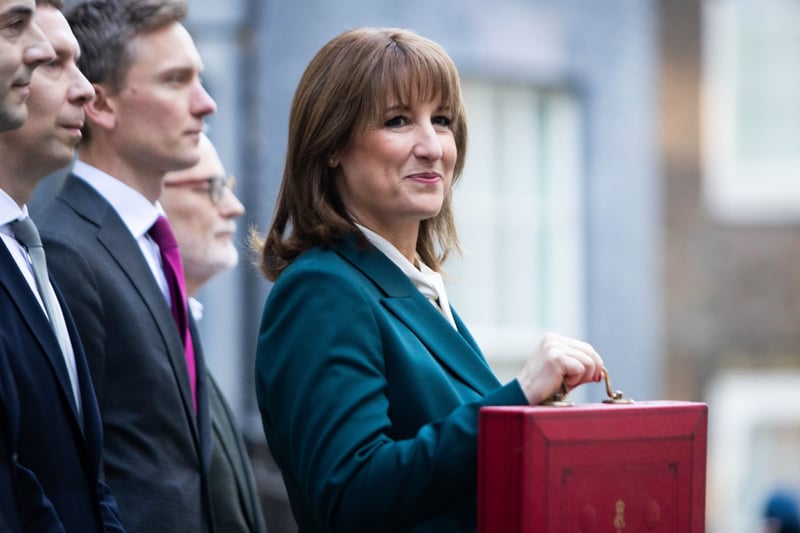
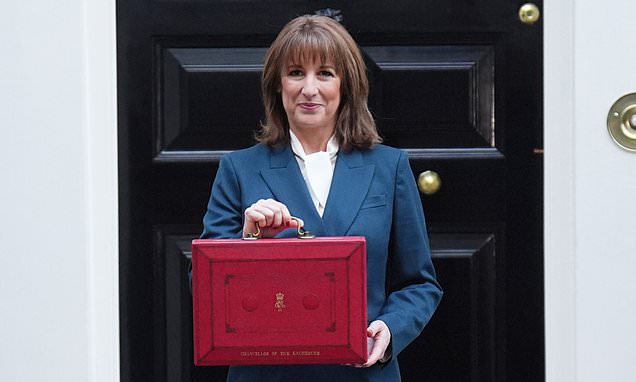
Rolling coverage of the latest economic and financial newsRachel Reeves targets UK’s wealthiest in £26bn tax-raising budgetWe also have budget analysis from research institute NIESR (the National Institute of Economic and Social Research) to digest.They identify that freezing the income tax thresholds until the end of the decade will fall on poorer workers the most (a point also made by Resolution Foundation this morning).Today’s Budget locks in a high-tax, high-debt steady state in a world of low productivity growth and higher interest rates. Even the historically large tax share of GDP now planned is only just enough to stabilise – not reduce – a debt ratio stuck around 100 per cent of GDP for the foreseeable future.Macroeconomically, the Budget implies a modest fiscal tightening over the forecast. Fiscal policy shifts from being a tailwind to a headwind for growth. Inflation is expected to be 0.3 pp lower over the next year, reflecting energy-related measures and the fuel duty freeze extension. The key question is whether the Bank of England chooses to look through this price effect or views it as altering the underlying inflation profile.Distributionally, the extension of the income tax threshold freeze to 2030 will fall disproportionately on the bottom half of the income distribution.Despite being the second Budget of this government’s term, there was a notable lack of economic vision beyond clearing fiscal hurdles. Reforms to the triple lock, council tax, and VAT were pushed into the background while the Chancellor focused – justifiably - on meeting the fiscal rules. Even then, the £22bn of fiscal headroom is not large, and the probability of meeting the fiscal rules remains, in essence, a coin toss.Poorer working age families protected most, richer pensioners spared the worst. Policies announced in this Parliament have been progressive, particularly for working-age households. The poorest half of families have gained £90 a year on average, compared to losses of £1,000 for the richest half. It was less progressive for pensioners however, with the poorest half losing £220 on average, while the richest half lost £680.The manifesto tax pledge has cost working people... Having previously hinted at raising Income Tax rates, the Chancellor chose instead to freeze personal tax thresholds for three more years. But raising all rates by 1p would have been less costly than freezing thresholds for anyone with an income below £35,000. Indeed, all but the top ten per cent of the income distribution are worse off because of opting for threshold freezes over rate rises (which raise similar amounts of revenue).…But abolishing the two-child limit helps working families. Three-in-five families set to benefit from its scrapping include at least one person in work. Overall, 560,000 families will gain an average of £5,310 in 2029-30.Pre-election austerity has been pencilled in... The departmental spending cuts announced in 2029-30, coupled with the Government’s commitment to raise health and defence spending and protect per pupil school funding, imply £6.4 billion of cuts to other departments like the Home Office, Justice and local government. Cuts of this nature would be equivalent to 88 per cent of the average annual cuts made during the austerity years (2009-10 to 2018-19).…As have pre-election tax rises. Nearly three-quarters of the £77 billion of extra tax over the next five years (2026-27 to 2030-31) is coming after April 2029, with £26 billion in 2029-30 alone.Debt is being driven up, not down. Reducing the country’s debt was cited as one of the Chancellor’s key priorities. But debt is rising over the forecast, and higher than forecast in March. For example, Public Sector Net Financial Liabilities (PSNLF) is rising as a share of GDP over this Parliament – from 81.3 per cent in 2024-25 to 83.7 per cent in 2028-29, before falling to 82.2 per cent in 2030-31. Continue reading...

Comments

Similar News

Business News