US Midterm Elections 2026: When Results Come In and What's at Stake
What Americans decide on 3 November 2026, when polls close in each time zone, why some counts take days, what control of the House and Senate changes, the races to watch and the results so far.
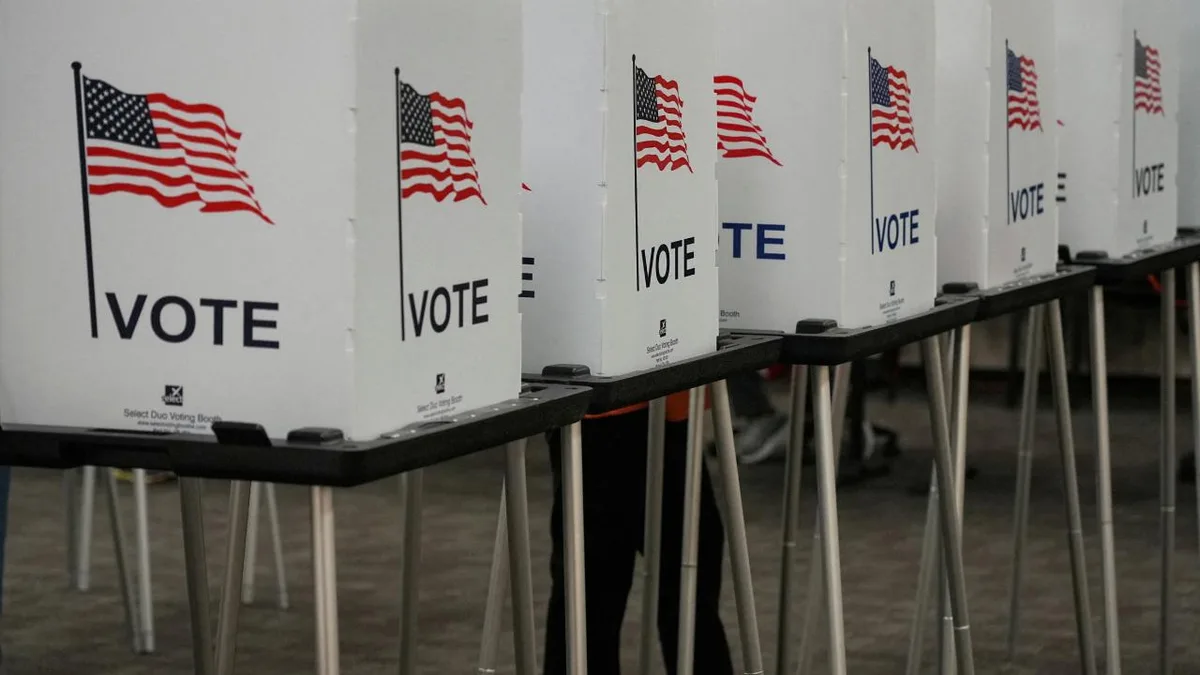
Americans vote on Tuesday, 3 November 2026, in midterm elections that decide control of both chambers of Congress halfway through Donald Trump's second term. All 435 seats in the House of Representatives, 35 of the 100 Senate seats and 36 governorships are on the ballot. The first polls close at 6 p.m. Eastern Time (23:00 GMT) and the last at 1 a.m. ET on Wednesday, but because every state counts under its own rules, some close races, and possibly control of a chamber, may not be known for days. This page explains what is being decided, when results usually arrive, why counting takes time and which races to watch. It will be updated as results come in.
What is on the ballot on 3 November 2026?
Going into election day, Republicans hold 218 House seats plus an independent who normally votes with them, Democrats hold 214, and two seats are vacant, according to CBS News. A party needs 218 seats for a House majority, so Democrats need a net gain of four. In the Senate, Republicans have 53 seats to the Democrats' 47. Democrats need a net gain of four there too, because in a 50–50 Senate Vice President JD Vance, a Republican, casts the deciding vote. The 35 Senate contests include a special election in Ohio for the seat Vance gave up when he became vice president. Of the 36 governor races, 21 have an incumbent seeking re-election and 15 are open seats, according to NPR.
When do polls close and when do results come in?
Each state sets its own polling hours, so results arrive in waves. The US left daylight saving time on 1 November, so Eastern Time is now six hours behind Central European Time and eight hours behind Turkey. Polls close first in most of Indiana and Kentucky at 6 p.m. ET (23:00 GMT, midnight CET, 02:00 in Turkey). At 7 p.m. ET they close in Georgia, South Carolina, Virginia, Vermont and most of Florida; at 7:30 p.m. ET in North Carolina, Ohio and West Virginia; and at 8 p.m. ET in Pennsylvania, Michigan, Maine and much of the East Coast, as well as in Kansas and most of Texas, where the 7 p.m. local closing falls an hour later in Eastern Time.
Later waves follow: Arizona, Iowa and New York at 9 p.m. ET (03:00 CET), California, Oregon and Washington at 11 p.m. ET, Hawaii and most of Alaska at midnight ET, and the last polling places in Alaska's Aleutian Islands at 1 a.m. ET (07:00 CET, 09:00 in Turkey). These times are the local closing hours published for 2026, converted to Eastern Time; states that span two time zones may close in stages. NBC News told viewers on election morning that key results may not come until the early hours of 4 November Eastern Time, which is Wednesday morning in Europe and Turkey.
Why can counting take days?
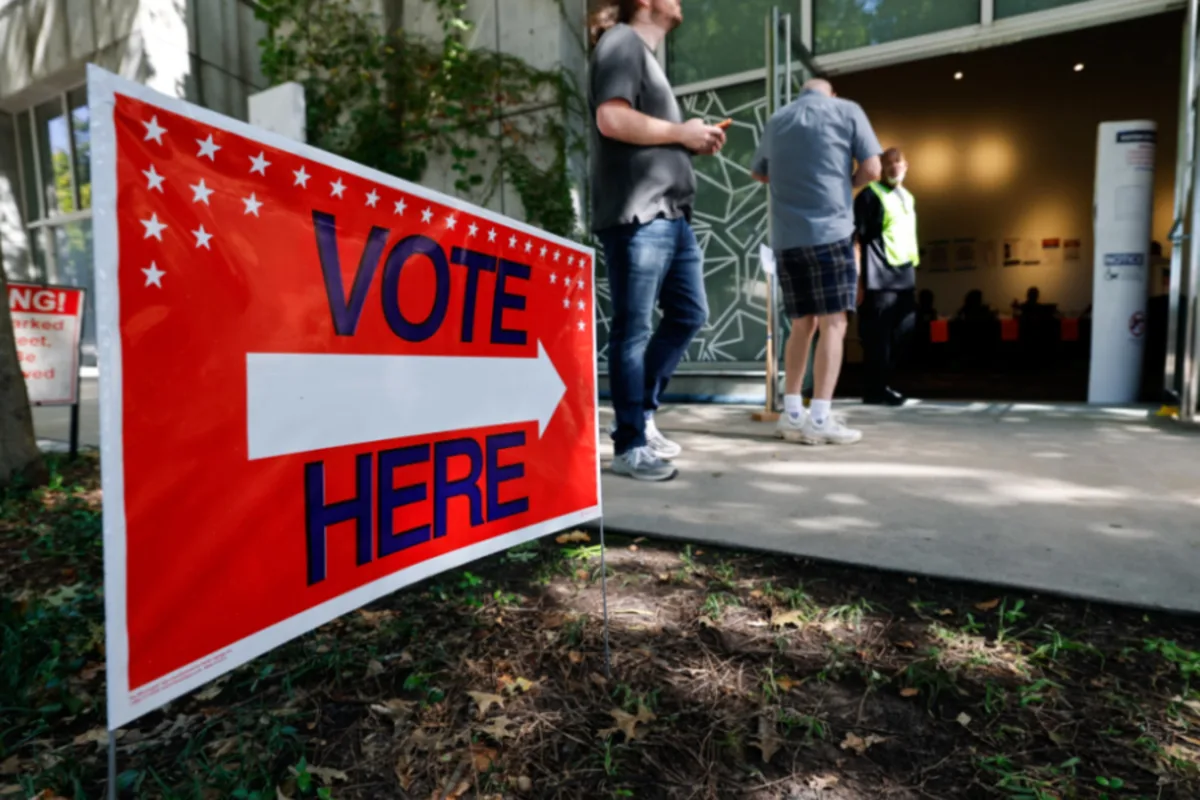
There is no single national count. Each of the 50 states, and often each county, runs its own election, and the rules for mail ballots differ widely. According to the National Conference of State Legislatures (NCSL), Pennsylvania and Wisconsin are among six states where officials may begin processing mail ballots only on election day itself, which slows their counts. California, where most people vote by mail, counts ballots postmarked by election day that arrive up to seven days later, so valid ballots can still arrive until 10 November, and its counties have 30 days to finish the count. More than 57 million Americans had voted early by election morning, according to the University of Florida Election Lab, above the roughly 46 million early votes of the 2022 midterms.
Some races are built to run past election night. Alaska uses ranked-choice voting: if no candidate wins more than 50% of first choices, the last-placed candidate is eliminated and those ballots move to each voter's next choice until someone passes 50%. Georgia holds a runoff on 1 December 2026 in any race where no candidate reaches 50%. The last midterms show how long it can take: in 2022 the Associated Press called the Senate for the Democrats on 12 November, four days after the vote, when it projected the Nevada race, and called the House for the Republicans on 16 November, eight days after. Such calls by news organisations are projections; the states certify official results weeks later.
What changes if a party wins the House or the Senate?
The House elects the Speaker, chairs every committee, can issue subpoenas for investigations, must approve every spending bill and is the chamber that can impeach a president. The Senate confirms federal judges, cabinet members and ambassadors, ratifies treaties and holds impeachment trials, where conviction requires a two-thirds majority. Republicans now control both chambers as well as the White House. If Democrats win either chamber, Trump's bills would need Democratic votes to pass, and a Democratic House could open investigations into his administration. A Democratic Senate could also block his nominees. The new Congress is sworn in on 3 January 2027.
Which races should you watch?
In the Senate, the most closely watched Republican-held seats are Maine, where Senator Susan Collins faces Democrat Troy Jackson; North Carolina, open since Senator Thom Tillis decided to retire, where former governor Roy Cooper (D) faces former Republican National Committee chair Michael Whatley; Ohio, where Senator Jon Husted faces former senator Sherrod Brown; Texas, where Republican Ken Paxton faces Democrat James Talarico; and Alaska, where Senator Dan Sullivan faces Mary Peltola. Iowa, Kansas and South Carolina are also on lists of competitive Republican seats. Democrats are defending Georgia, where Senator Jon Ossoff seeks re-election, New Hampshire, and Michigan, where Republican Mike Rogers faces Democrat Abdul El-Sayed after Representative Haley Stevens, who lost the Democratic primary, endorsed Rogers.
For governor, Texas pits Greg Abbott (R) against Gina Hinojosa (D), and Ohio's open seat pits Vivek Ramaswamy (R) against Amy Acton (D) after Mike DeWine reached his term limit. In Arizona, Katie Hobbs (D) seeks a second term; NPR's list of close contests also includes Georgia, Iowa, Kansas, Michigan, Nevada and Wisconsin. In the House, CBS News counts 47 battleground districts, 20 held by Democrats and 27 by Republicans, among them a Westchester County seat in New York where Representative Mike Lawler (R) faces Cait Conley (D). The maps changed too: Texas redrew its districts in 2025 to add up to five Republican-leaning seats, and California voters answered with Proposition 50, designed to create up to five Democratic-leaning ones. Several states also vote on ballot measures on abortion, transgender girls in school sports and taxing billionaires.
What do the polls say, and what can't they tell?
Polls point to a good night for Democrats, but they are estimates, not results. A national polling average cited by Al Jazeera two days before the vote put Democrats at 51.5% and Republicans at 43.1% on the question of which party voters want in Congress. A CBS News model published on 25 October estimated that Democrats would win 229 House seats, within a range of 215 to 237, so a scenario where they fall short of a majority is still inside it. Forecasters call the Senate a toss-up because Democrats must also win states Trump carried comfortably in 2024. Polls have missed before: in 2022 Democrats did better than most analysts expected. In late October Trump said he would accept the results if the vote is "honest".
Results so far
Last updated: 3 November 2026, before polls closed. No votes have been counted yet. House: no race called (218 seats needed for a majority). Senate: no race called (Democrats need a net gain of four seats; Republicans keep control with 50 seats). Governors: no race called. This section will be updated as the Associated Press and state election offices report results.
What happens next?
3 November, 6 p.m. ET (midnight CET, 02:00 in Turkey): first polls close. 4 November, early hours ET: results from most battleground states are expected. 10 November: the last day California mail ballots postmarked by election day can arrive. 1 December: Georgia runoffs, in any race where no candidate reached 50%. Early December: states certify their results; California's counties have 30 days to finish counting. 3 January 2027: the new Congress is sworn in.
Sources
- CBS NewsElection Day 2026 live updates: Senate and House control at stake (3 November 2026)en
- NBC NewsElection 2026 live updates (3 November 2026)en
- National Conference of State LegislaturesTable 16: When absentee/mail ballot processing and counting can beginen
- California Secretary of StateVote-by-mail FAQ (2026)en
- Georgia.gov2026 Election (general election 3 November, runoff 1 December)en
- MassLive via Yahoo NewsElection Day 2026: what to know about the midterms (poll closing times)en
- 270toWinLocal poll closing times: 2026 midterm electionen
- Al JazeeraMore than 50 million votes cast in US midterm elections: what does it mean? (1 November 2026)en
- NPR via Connecticut PublicHere's a look at the 36 races for governor this year (5 May 2026)en
- CBS SacramentoCalifornia's Prop 50 redistricting measure may have consequences beyond its bordersen
- States NewsroomDemocrats projected to retain U.S. Senate control after winning Nevada seat (12 November 2022)en
- States NewsroomRepublicans win control of the U.S. House with 218th seat (16 November 2022)en
- CupureUS Midterm Polls Give Democrats an Edge in House and Senate Racesen
- CupureKey Races to Watch in the U.S. Midterm Electionsen
- CupureNearly 48 Million Americans Cast Early Votes in Record Midterm Turnouten
- CupureUS Midterm Ballot Measures Tackle Abortion, Transgender Athletes and Billionaire Taxesen
- CupureTrump Says He Will Accept Midterm Results if Elections Are “Honest”en
- CupureOhio Governor’s Race Turns Personal as Ad Featuring Amy Acton’s Estranged Mother Circulatesen
- CupureHaley Stevens Endorses Republican Mike Rogers in Michigan Senate Raceen