UEFA Nations League 2026–27 Explained: Türkiye and Germany in League A, November Games
How the 2026–27 UEFA Nations League works — leagues, quarter-finals, Finals, promotion and relegation — plus where Türkiye and Germany stand in League A before their November matches.
The 2026–27 UEFA Nations League is the fifth edition of UEFA's competition for national teams, with 54 sides split into four leagues by strength. Türkiye and Germany both play in League A, the top tier: Türkiye in Group A1 with France, Italy and Belgium, Germany in Group A2 with the Netherlands, Greece and Serbia. The league phase began on 24 September 2026 and ends on 17 November 2026, the top two of each League A group go to quarter-finals in March 2027, and four teams will meet at a Finals tournament scheduled for 9–13 June 2027. This edition is also a transition year: its promotion and relegation rules are built to create a new three-league competition for 2028–29.
How does the 2026–27 Nations League format work?
According to UEFA, Leagues A, B and C each have 16 teams in four groups of four, while League D has six teams in two groups of three. Every team plays each group opponent home and away, so League A sides play six matches. UEFA set six matchdays: 24–26 September, 27–29 September, 1–3 October and 4–6 October 2026 (one long international break in which most teams played four games), then 12–14 November and 15–17 November 2026. Three points are awarded for a win and one for a draw. If teams finish level on points, Article 15 of the regulations ranks them first on head-to-head points, then head-to-head goal difference and head-to-head goals scored, and only after that on overall goal difference, goals scored, away goals, wins, away wins, disciplinary points and finally the competition's access list.
How do the quarter-finals, Finals, promotion and relegation work?
The four League A group winners and four runners-up reach the quarter-finals, played 25–30 March 2027. Under Article 17 of the 2026/27 regulations, a draw pairs each seeded group winner with a runner-up from a different group. Ties are two-legged: the runner-up hosts the first leg and the group winner the second, and the side with more goals on aggregate goes through, with extra time and penalties if needed. The four quarter-final winners play single-match semi-finals, a third-place match and a final at stadiums chosen by UEFA's Executive Committee. UEFA's latest overview, dated 3 October 2026, lists the Finals for 9–13 June 2027 and says the host has not yet been confirmed.
Because UEFA is scrapping League D and moving to three leagues of 18 teams for 2028–29, the 2026–27 rules differ from earlier editions. In League A, the eight quarter-finalists and the two best-ranked third-placed teams stay up. The two lowest-ranked third-placed teams and the two highest-ranked fourth-placed teams go into League A/B play-offs against the four League B runners-up, also in March 2027; play-off winners play in League A next time. The two lowest-ranked fourth-placed teams are relegated directly to League B. The four League B group winners are promoted directly. When teams in the same position are compared across groups, Article 19 counts points, then goal difference, then goals scored; for third-placed teams, results against the fourth-placed team in their group are ignored, while for fourth-placed teams all results count. On EURO 2028, which will be hosted by the United Kingdom and the Republic of Ireland, UEFA's own wording is cautious: the 2026–27 Nations League is expected to be linked to qualification, and some teams will get a second chance to reach the EURO play-offs based on their Nations League results. UEFA has not detailed that mechanism in the pages reviewed for this article.
Türkiye in Group A1: results so far and what it needs in November
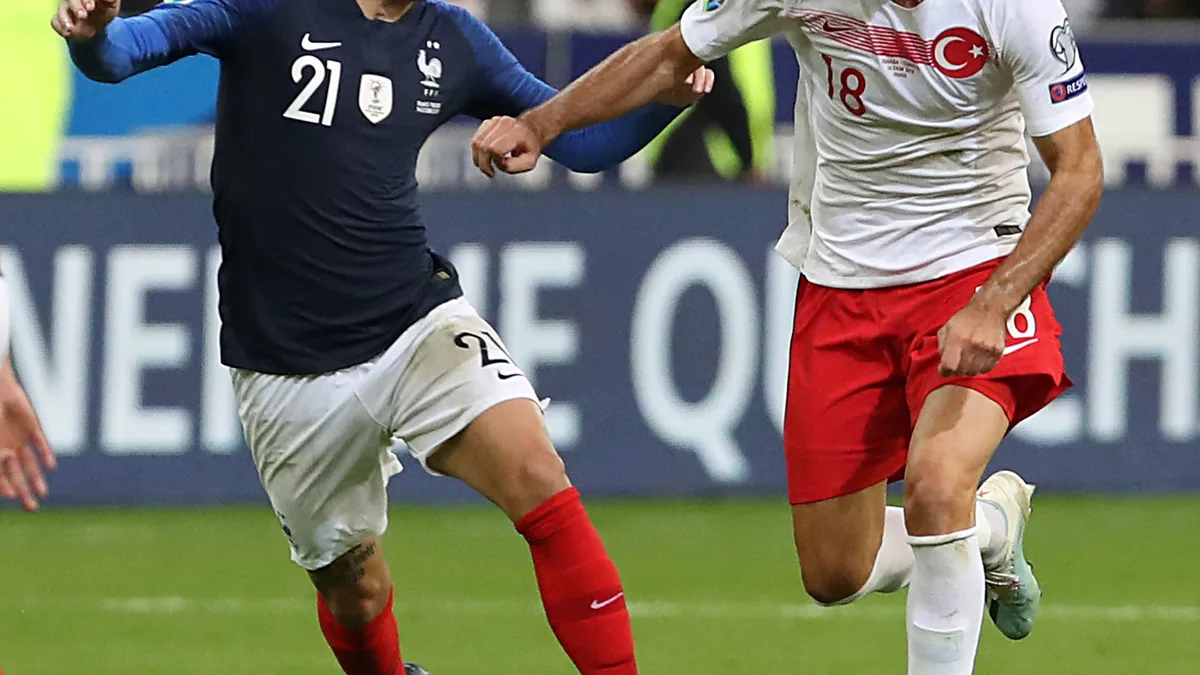
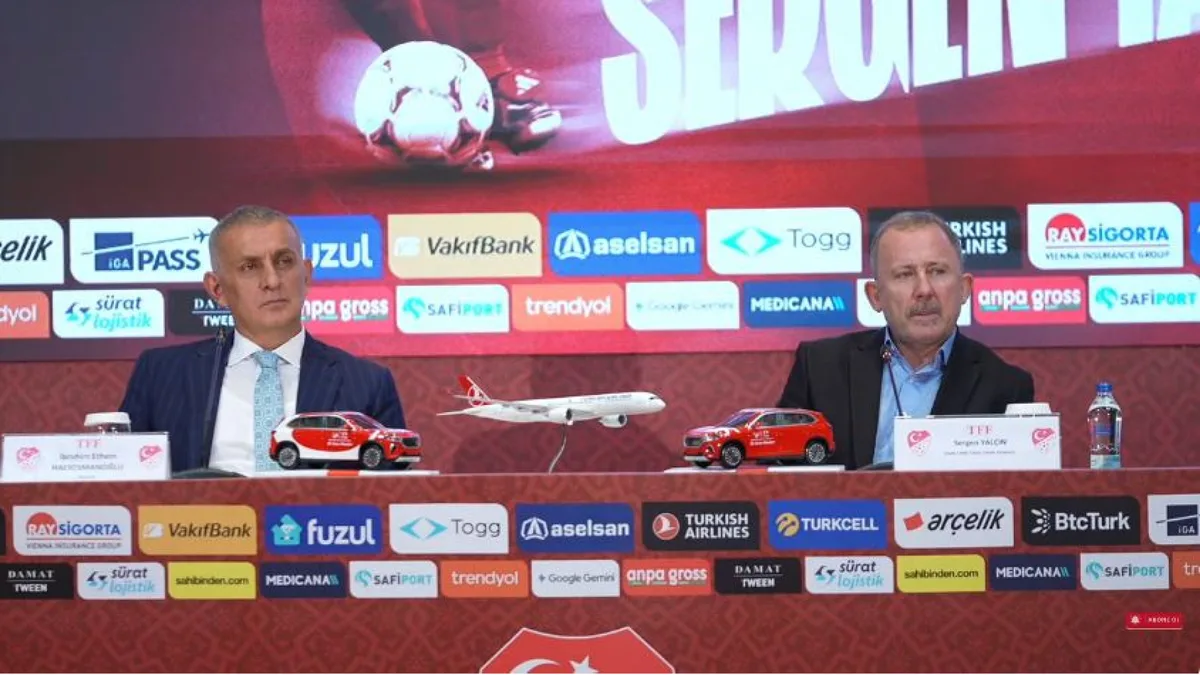
Türkiye have lost all four of their matches. They opened with a 1-0 home defeat to France in İzmit on 25 September, lost 4-1 to Italy in Bursa on 28 September, which was Roberto Mancini's first win since returning as Italy coach, fell 3-0 to Belgium in Liège on 2 October, where Kevin De Bruyne scored twice and Romelu Lukaku once, and lost 3-1 to Italy in Bologna on 5 October. The Turkish Football Federation parted ways with coach Vincenzo Montella after the fourth defeat; his tenure covered 1,115 days and 40 matches, with 21 wins, five draws and 14 losses. On 22 October Sergen Yalçın signed a four-year contract as his successor, so the November games will be his first in charge. Group A1 standings as of 26 October 2026 (no matches since 5 October): France 10 points (goals 7-2), Italy 7 (8-5), Belgium 6 (6-5), Türkiye 0 (2-11).
Türkiye host Belgium at the Gürsel Aksel Stadium in İzmir on Thursday 12 November 2026 at 20:00 Turkish time (18:00 CET), then visit France at the Stade Atlantique in Bordeaux on Sunday 15 November at 22:45 Turkish time (20:45 CET). With a maximum of six points left and France and Italy already above that, Türkiye can no longer finish in the top two. Third place is still mathematically possible but narrow: it requires two wins, a Belgium defeat against Italy in Brussels on 15 November, and then beating Belgium on the head-to-head tiebreakers after their 3-0 win in Liège. Otherwise Türkiye finish fourth, and their League A status depends on how they compare with the other three fourth-placed teams. If the league phase had ended on 26 October, Türkiye would rank last of those four: Norway had 3 points, Serbia 0 (goal difference -5), Czechia 0 (-8) and Türkiye 0 (-9), which would mean direct relegation; the top two fourth-placed teams go to the A/B play-offs instead.
Germany in Group A2: results, table and November fixtures
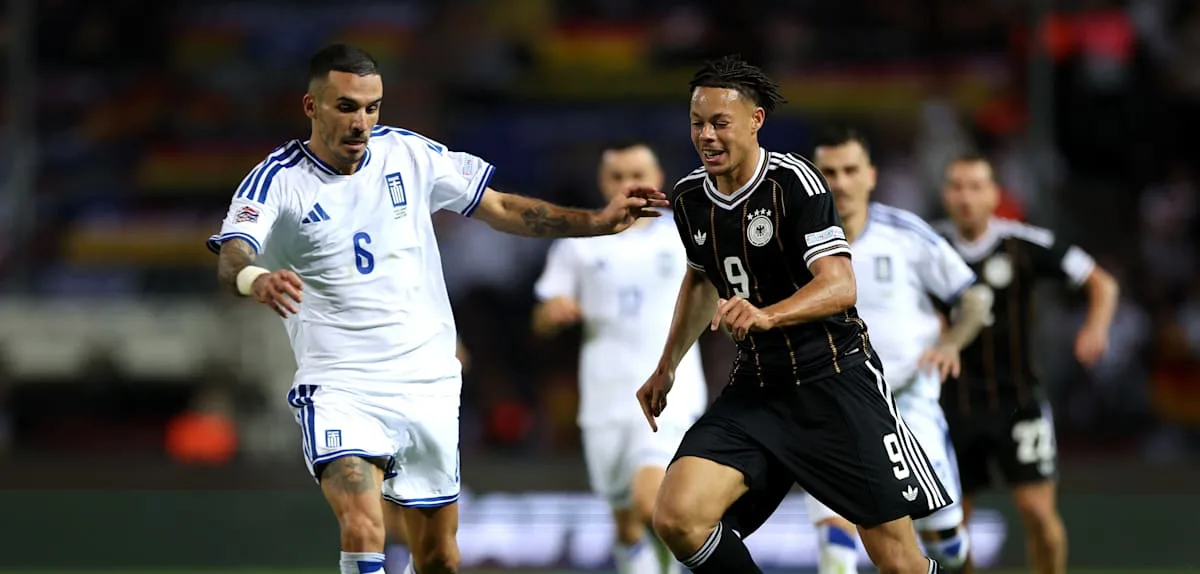
Germany, coached by Jürgen Klopp, drew 1-1 with the Netherlands in Amsterdam on 24 September, lost 1-0 to Greece in Augsburg on 27 September after a goal by Dimitris Kourbelis, beat Serbia 2-0 in Munich on 1 October and drew 0-0 with Greece in Thessaloniki on 4 October. Standings as of 26 October 2026: Netherlands 8 points (7-5), Greece 8 (5-3), Germany 5 (3-2), Serbia 0 (3-8). Germany play Serbia in Belgrade on Friday 13 November at 20:45 CET and host the Netherlands at Berlin's Olympiastadion on Monday 16 November at 20:45 CET, while the Netherlands and Greece meet in Amsterdam on 13 November. Germany can still reach the quarter-finals, but because they trail by three points they also depend on the other results; if they finish third, the ranking of third-placed teams decides whether they stay in League A directly or go into the March play-offs.
Previous winners and what happens next
UEFA introduced the Nations League in 2018 to replace many friendlies with competitive matches between similarly ranked teams. Portugal won the first Finals in 2019, beating the Netherlands 1-0 in Porto. France beat Spain 2-1 in Milan in 2021. Spain won in 2023, beating Croatia on penalties (5-4) after a 0-0 draw in Rotterdam, and Portugal won again in 2025, beating Spain 5-3 on penalties after a 2-2 draw in Munich. Portugal, Spain and France are therefore the only winners so far, with Portugal the only two-time champion. Key dates ahead: 12–17 November 2026, matchdays 5 and 6 decide group places, quarter-finalists, play-off teams and the two directly relegated League A sides. Later the quarter-final draw sets the pairings (date not yet announced). 25–30 March 2027: quarter-finals and League A/B and B/C play-offs. 9–13 June 2027: Finals, host to be confirmed by UEFA. 2028–29: the first edition with three leagues of 18 teams. This page will be updated after the November matches.
Sources
- UEFA — 2026/27 UEFA Nations League: All you need to know
- UEFA — Regulations of the UEFA Nations League 2026/27, Article 17 (League A knockout stage)
- UEFA — Regulations, Article 15 (Equality of points, league phase)
- UEFA — Regulations, Article 19 (Individual league and overall rankings)
- UEFA — Promotion and relegation between the 2026/27 and 2028/29 editions (PDF)
- UEFA — Nations League standings
- Anadolu Agency — Explainer: UEFA Nations League returns for 2026-27 edition
- Türkiye Gazetesi — Türkiye's Belgium and France matches: venues and kick-off times
- Wikipedia — 2026–27 UEFA Nations League A (results and tables)
- Cupure — Turkey Hosts France in UEFA Nations League A Group Opener
- Cupure — Italy Defeats Turkey 4-1 in Nations League; France Wins Late Against Belgium
- Cupure — Belgium Secures 3-0 Victory Over Turkey in Nations League Match
- Cupure — Turkey Dismisses Coach Vincenzo Montella After Four Nations League Defeats
- Cupure — Vincenzo Montella’s Turkey Tenure Lasted 1,115 Days Across 40 Matches
- Cupure — Sergen Yalçın Signs Four-Year Deal as Turkey National Team Coach
- Cupure — Greece Defeats Germany 1-0 in UEFA Nations League Match
- Cupure — Germany and Greece Draw 0-0 in Nations League Match