Cyberattack Disrupts Refrigeration Systems at Hundreds of French Supermarkets
Hackers altered refrigeration settings at French supermarkets, causing temperatures to rise as high as 50°C. Intermarché and Coopérative U stores were among those affected, and shops had to discard fresh and frozen food.
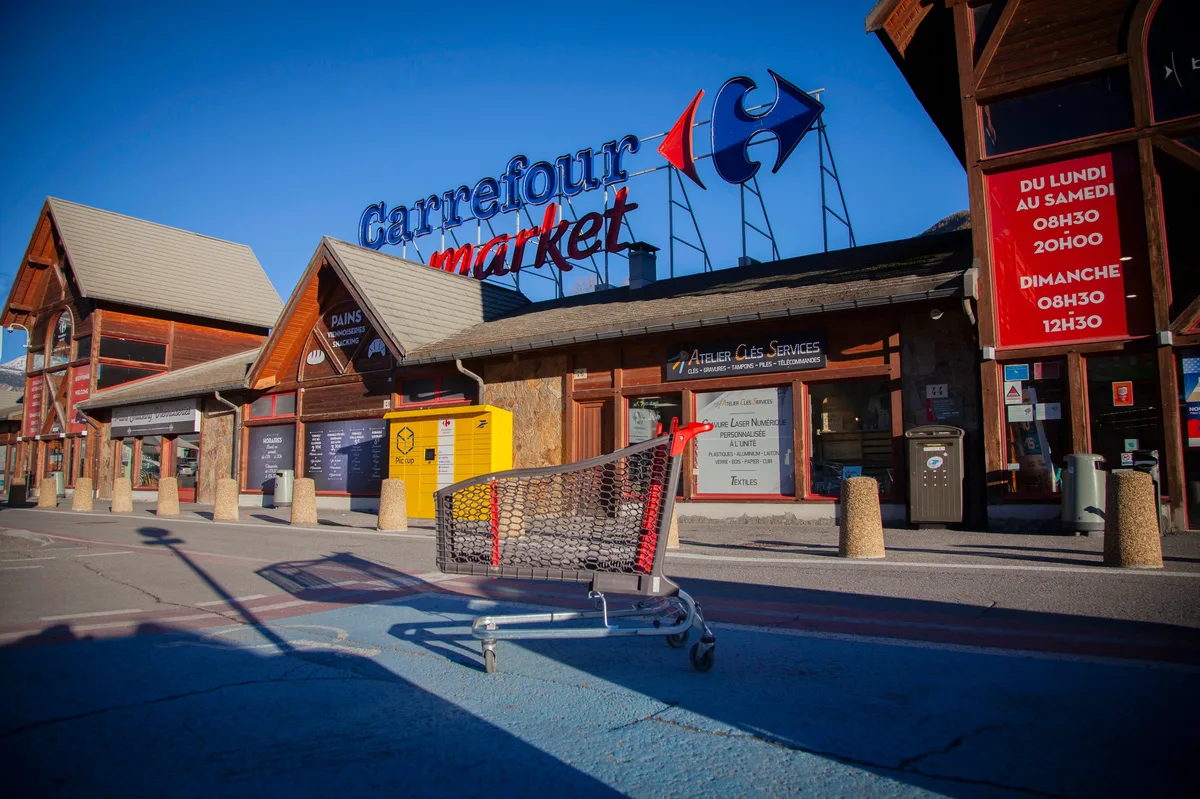
During the night of Sunday, October 11, to Monday, October 12, 2026, attackers took remote control of refrigeration controllers in several hundred French supermarkets and switched fridges and freezers into defrost mode, pushing some set-points as high as 50°C. Intermarché and its Netto brand, Coopérative U, E.Leclerc, Carrefour and Monoprix all reported affected stores, and many had to throw away their entire stock of fresh and frozen food. The targeted equipment was supplied by the Danish manufacturer Danfoss; the company says most of the hit units were end-of-life models that no longer receive security updates. The Paris prosecutor's office has opened an investigation, France's cybersecurity agency ANSSI has told operators to take the controllers off the internet, and as of October 13 no one had claimed responsibility.
What happened, and which supermarket chains were hit?
Store staff arriving on Monday morning found cold cabinets warming instead of cooling. Thierry Cotillard, head of Les Mousquetaires, the group behind Intermarché, told BFMTV that the hackers had put all of the group's refrigerated units into defrost and driven them up to 50°C. Reported temperatures varied from store to store: German IT outlet Heise cited about six hours at up to 50°C, Le Figaro reported cabinets at 35°C, and Intermarché La Haye's director Julien Freret said his fridges reached 27°C. The story was first revealed by BFMTV and confirmed by the retailers to AFP. The Paris prosecutor's office said some equipment had also caught fire.
The counts moved through the day and still differ between sources. Early reports put Intermarché at about 150 stores (Reuters) or 150 to 200 (AFP); by Monday afternoon the retailers told AFP at least 300 Intermarché and Netto stores were affected. Coopérative U first said fewer than 100 outlets; on October 13 its chief executive, Dominique Schelcher, told RTL the figure was 80 of roughly 2,000 stores, and that only a minority had to discard goods. Carrefour reported 80 supermarkets, Monoprix about 30 of its roughly 490 stores, and E.Leclerc "several" stores, saying one of its refrigeration equipment suppliers had been attacked. Semafor and Bild put the total at around 400. Danfoss itself gave no count, saying only that a "limited number" of refrigeration management systems were affected.
How can a cyberattack switch off supermarket refrigeration?
A supermarket's cold aisles are run by a central controller that schedules defrost cycles, sets temperature thresholds and raises alarms. These controllers are often reachable over the internet so that refrigeration contractors can monitor and adjust them remotely; Coopérative U said its stores do not buy from Danfoss directly but through such installers. Whoever gains administrator access can change set-points and schedules for every cabinet in the store at once. Antoine Hautin of the consultancy Almond told AFP that these systems were designed for reliability and low cost rather than cyber protection, while noting that hitting hundreds of sites at once showed "a certain level of sophistication".
Danfoss told AFP that most affected units were legacy products, naming the AK-SM 800, declared end-of-life in May 2021, and the AK-SC 355, phased out in 2016; some units of the current AK-SM 800A were also hit while running outdated firmware. On August 9, 2026, researchers at Claroty's Team82 had published three flaws in the AK-SM 800A, including a hidden daily "code of the day" that could bypass the administrator password (CVE-2025-41450), and counted 2,765 such devices exposed online in a Censys scan. AFP separately reported that Danfoss disclosed a flaw on September 18. Neither Danfoss nor French authorities had said, as of October 13, which weakness the attackers actually used.
What happened to the food, and is there a risk for shoppers?
Once the cold chain is broken, retailers must destroy the products concerned, and Intermarché said affected stores had to discard all fresh and frozen goods; it also told BFM that none of those items could have been bought by customers. Individual losses reported by regional media ranged from about €10,000 at one store to €55,000 in Issy-les-Moulineaux and €60,000 at a Super U in Doué-en-Anjou; Belgian broadcaster VRT cited about €270,000 for two stores in Alsace combined. Schelcher put the cost per U store at tens of thousands of euros for small shops and nearly €200,000 for hypermarkets, according to Le Figaro. Cotillard estimated national losses at tens of millions of euros in a single day, and Intermarché warned that insurance may not cover this kind of incident. No industry-wide figure had been published by October 13.
Who is behind the attack?
Nobody had been identified and no group had claimed the attack as of October 13, and no authority had attributed it. Some commentary, including a BFMTV segment, raised a possible Russian link, and the attack came shortly after President Emmanuel Macron ordered infrastructure to be protected against Russian "hybrid attacks", but no official source has connected the two. Danfoss noted in an October 2025 newsletter that AK-SM 800 controllers had already been targeted in 2022, at 16 supermarkets in Russia and 40 stores in Israel, without naming perpetrators. Cotillard said on BFMTV that his group faces three to four cyberattacks a day.
How are ANSSI and the Paris prosecutor investigating?
The Paris prosecutor's office opened an inquiry on its own initiative into what it called a large-scale attack on connected refrigerators at several major food retailers. Its cybercrime section assigned the case to the Office anti-cybercriminalité (OFAC), with a brief to identify the victims and link them to the reported food losses and fires. Prime Minister Sébastien Lecornu asked ANSSI to take up the matter; a source close to him said the agency had found a vulnerability in software from a Danish company and contacted the vendor. ANSSI director general Vincent Strubel called it urgent to disconnect Danfoss AK-SM and AK-SC controllers from the internet or filter access very tightly. The retail federation FCD demanded "full transparency" from Danfoss and installers.
ANSSI's response team, CERT-FR, issued alert CERTFR-2026-ALE-012 on October 12, widening it on October 13 to Copeland and Dixell xweb controllers. It said it knew of numerous compromises, warned that campaigns are probably still under way, and told operators to cut internet exposure, review defrost schedules and allow remote access only via VPN. A factory reset alone, it added, leaves an unpatched end-of-life device likely to be hit again.
A wider pattern of attacks on operational technology
The incident shows how equipment once isolated in a back room now sits on the same networks as ordinary IT. Le Figaro described it as a turning point in the convergence of IT and industrial systems. Sekoia analyst Félix Aimé told Reuters that Spain, Portugal, Poland, Germany and Belgium were also affected, without details. In the Netherlands, Ahold Delhaize's Albert Heijn halted several distribution centres after a separate "security incident" the same day; no link to the French attack has been established. EU agriculture commissioner Christophe Hansen said food security requires more attention at all levels, and analyst Steven Lachance told Al Jazeera that energy grids or hospitals could be next.
What comes next?
The OFAC investigation must first establish the list of victims and the damage, before any suspect can be identified; anyone eventually charged is presumed innocent. Retailers and installers are disconnecting or replacing old controllers, and Danfoss has urged customers to update firmware and migrate legacy systems. Questions remain over who pays for the spoiled stock, how many controllers are still exposed across Europe, and whether ANSSI or Danfoss will publish technical indicators of compromise, which CERT-FR had not done as of October 13.
Sources
- CERT-FRCERTFR-2026-ALE-012: Incident affecting remote controllers of refrigeration installations
- Claroty Team82Freeze the controller, defrost the food: vulnerabilities in Danfoss refrigeration controllers
- La Libre (AFP)Des supermarchés français touchés par une cyberattaque inédite de leurs installations frigorifiques
- Al Jazeera'Unprecedented' cyberattack hits French supermarkets, causing food losses
- The Hacker NewsAttackers heat French supermarket fridges up to 50°C by hijacking Danfoss controllers
- RTÉFridges shut down in French supermarkets after cyberattack
- HeiseCyberangriff auf französische Supermarkt-Kühlschränke: Hunderte Waren verdorben
- KonbiniCyberattaque des frigos de supermarchés : on fait le point