Why Governments Want You to Keep 3 Days of Supplies: The UK's 2026 Be Ready Kit Explained
What the UK's October 2026 Be Ready campaign asks households to store, the reasons ministers gave, how it compares with EU, German, Turkish and US guidance, and what the United States did and did not say.
On 22 October 2026 the UK government launched "Be Ready", a Cabinet Office campaign asking every household to be able to manage for three days without power, water, phone or internet. The official checklist asks for 3 litres of drinking water per person per day, food that needs no cooking or refrigeration, a battery or wind-up FM radio, a torch, cash and copies of key documents. Ministers named severe weather and cyber attacks as the main reasons. The advice puts Britain in line with a 72-hour benchmark the European Union adopted in March 2025, and with long-standing guidance in Germany, Turkey and the United States.
What exactly did the UK government say?
Security Minister Dan Jarvis announced the campaign in a written statement to Parliament on 22 October, and the old gov.uk/prepare address now redirects to the new Be Ready site. Its core line is that being ready for 3 days helps households cope "while support reaches those most in need". The idea is that people who can look after themselves for a few days leave emergency services free for those who can't. The Cabinet Office describes the launch as the first stage of a three-year campaign. According to IBTimes UK, more than 500 charities and businesses have signed up to distribute the material. Prime Minister Andy Burnham backed the advice at a wildfire resilience summit in Aintree on 23 October. Reuters reported him saying Britain had been "on the back foot" in past emergencies, and Anadolu Agency reported that he stressed the advice was not about panic buying. Defence Secretary Wes Streeting urged people to be "alert but not alarmed".

What should be in a three-day emergency kit?
The official UK checklist covers ten groups of items. Water: 3 litres per person per day for drinking, so 9 litres per person over three days, plus more for cooking and washing. Food: three days of long-life food that needs neither cooking nor a fridge, such as tinned meat, fish or vegetables, dried fruit and nuts. Hygiene: hand sanitiser, wet wipes and bathroom products. Light and warmth: a torch with spare batteries, blankets, sleeping bags and warm clothing. Information: a battery or wind-up FM radio and a charged power bank. Money and documents: a mix of coins and notes, cards, copies of ID and a written list of phone numbers and medication doses. Health: a first aid kit and essential medicines. Babies: ready-to-feed formula, because boiling water for powder may not be possible, plus nappies. Pets: food and water. The guidance stresses building the kit gradually, starting with what is already in the cupboards and adding an item or two on regular shopping trips. It also says to check expiry dates every six months and to talk to neighbours about sharing support during an outage. It accepts that not everyone can do every step, and suggests donating spare items or printing documents for someone who cannot.
Why now, and is Britain preparing for war?
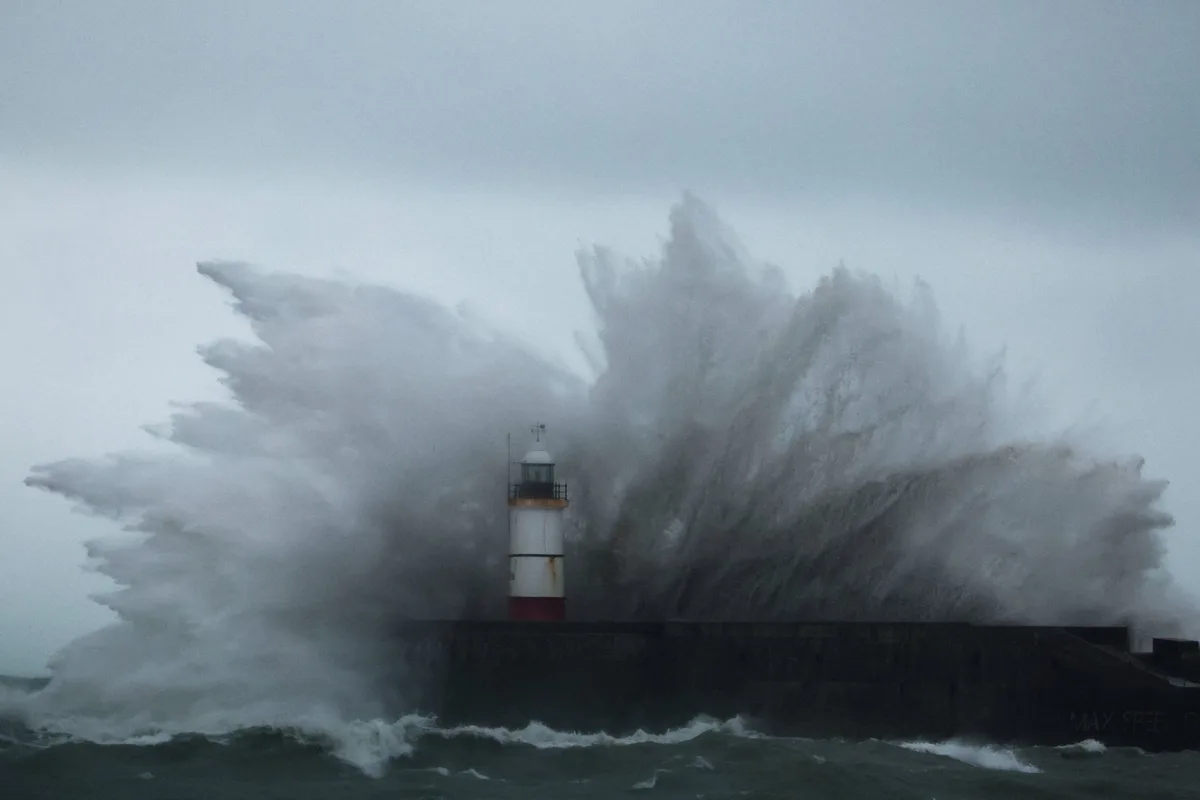
The campaign website names "severe weather" and "cyber attacks" as the threats to everyday services. The Cabinet Office pointed to the previous winter's storms and the summer's wildfires. The timing also followed the PHP2Shell flaws disclosed on 21 October. Reuters described the incident as one of the most significant cyber events in years, and in the UK 32 government services went offline. In the same week Storm Austen left more than 9,000 homes in Cornwall and Devon without power. Streeting said AI would make cyber incidents more common. The National reported that the official framing also covered hostile activity from Russia and Iran and supply-chain disruption by hostile states or terrorists. Anadolu linked the advice to a National Audit Office warning about cyber and climate risks to the food supply chain.
The campaign text does not mention war. Several outlets, notably in Turkey and Italy, framed it as a war warning. Part of the reason is that Streeting wrote in The Telegraph on 24 October that the UK has "a little over 1,000 days" to be ready, with allies, to fight. HuffPost UK reported that he argued adversaries could be ready by around 2030 and that Russia is stepping up hybrid warfare against NATO. That is a defence-readiness argument, separate from the household checklist. Some commentators also read the campaign as preparing the public for defence-spending choices. According to Bloomberg, as cited by The National, the campaign had been planned under Keir Starmer and was delayed after Burnham took office.
What did the US say, and how do the EU, Germany and Turkey compare?
EU: the European Commission's Preparedness Union Strategy of 26 March 2025 set a goal of "population self-sufficiency of minimum 72 hours", covering natural disasters, cyber attacks and geopolitical crises. Commissioner Hadja Lahbib presented a sample kit with water, food, a torch, a power bank, a radio, cash and medicine. Germany: the federal civil protection office BBK recommends being able to supply yourself for up to ten days, and says that even three days helps a lot. Its brochure works with about 2 litres of drinkable fluid per person per day. Turkey: AFAD's disaster and emergency bag is designed to sustain a household for 72 hours, with food, water for each family member, clothing, hygiene items, copies of documents and supplies for dependants and pets. United States: Ready.gov advises one gallon (about 3.8 litres) of water per person per day for several days, plus several days of non-perishable food, a battery or hand-crank radio, a flashlight and a first aid kit.
No new US household-stockpiling instruction was issued in October 2026. FEMA's standing advice comes from National Preparedness Month, launched on 1 September 2026 under the theme "Americans Stand Ready". FEMA Administrator Cameron Hamilton presented preparedness as a civic duty and pointed households to ready.gov/kit. A separate US headline in the same days was about the military, not households. On 25 and 26 October, CNN, citing two US officials, reported that US forces could begin large-scale strikes on Iran within 96 hours of an order from President Trump, and said no decision had been made. That report is unrelated to the UK's civilian checklist.
What happens next?
Be Ready is the first phase of a three-year UK campaign, so more guidance and outreach are expected through 2029. The early public response has been uneven. Retailers reported wind-up radios selling out, with at least seven models out of stock at four retailers. The British Retail Consortium cautioned that naming products risks panic buying, and Paymaster General James Murray admitted he had not yet followed the advice himself. In the EU, the 72-hour target remains guidance rather than law, and national agencies such as the BBK publish their own lists. This page will be updated when the UK publishes later campaign phases or the US changes its guidance.
Sources
- GOV.UK — Be Ready campaign
- GOV.UK — Be Ready checklist (PDF, October 2026)
- GOV.UK — Be ready for emergencies
- FEMA — National Preparedness Month 2026 (1 September 2026)
- Ready.gov — Build a kit
- BBK — Vorsorge für den Notfall
- Reuters via HuffPost — U.K. tells public to keep three days' emergency supplies at home (23 October 2026)
- The National — UK government advises stockpiling water and food (23 October 2026)
- IBTimes UK — UK households told to prepare for three days of disruption (23 October 2026)
- Anadolu Agency — British premier urges UK households to stockpile water, food (23 October 2026)
- HuffPost UK — UK must be ready for war in 1,000 days, Defence Secretary warns (25 October 2026)
- Cyprus Mail (Reuters) — EU tells the public to hold 72 hours of emergency supplies (26 March 2025)
- Cupure — UK Government Urges Households to Keep Three Days of Food, Water and Cash for Emergencies
- Cupure — Emergency Preparedness Advice Drives Up Crank Radio Sales in the UK
- Cupure — PHP Security Flaw Takes 32 UK Government Services Offline
- Cupure — Storm Austen Brings Strong Winds and Power Cuts, Closing Schools and Disrupting Travel in Britain
- Cupure — CENTCOM Reportedly Has Plans for Possible Iran Strike Pending White House Approval