
Germany's New Military Service 2026: Who Is Affected, and What About Dual Citizens?
What Germany's new Wehrdienst law requires of men born from 2008, whether German-Turkish dual citizens must take part, how Turkey's bedelli and dövizle askerlik rules apply, and who is protesting.
Germany's new military service law, the Wehrdienst-Modernisierungsgesetz, has been in force since January 1, 2026. It obliges every German man born in 2008 or later to fill in a Bundeswehr questionnaire and to attend a medical screening (Musterung), while service itself stays voluntary unless the Bundestag passes a further law. Because German citizenship is what counts, German-Turkish dual nationals are covered like any other German man; Turkish citizens without a German passport are not. Turkey, for its part, still expects its male citizens, dual nationals included, to do Turkish military service or use its paid options, and a proposal to exempt those who served abroad is being discussed but is not law. The law has also triggered protests: on September 25, 2026, organisers counted more than 45,000 students at school strikes in around 100 German cities.
What does Germany's new military service law do?
The Bundestag passed the law on December 5, 2025 by 323 votes to 272, with one abstention, according to the parliament's roll-call record; CDU/CSU and SPD voted in favour, while AfD, Greens and Die Linke voted against. The Bundesrat approved it on December 19, 2025 and it took effect on January 1, 2026, the defence ministry (BMVg) says. Germany had suspended conscription in 2011. Under the new model, volunteers sign up for at least six months. The BMVg lists starting pay of at least €2,600 gross a month, or €2,700 for those who sign up as fixed-term soldiers for 12 months or more.
Who has to fill in the questionnaire and attend the Musterung?
Since mid-January 2026, 18-year-olds have received a letter with a QR code to an online questionnaire about health, education and willingness to serve. It is mandatory for men and voluntary for women; leaving it unanswered or giving false answers is an administrative offence that can bring a fine. According to the Federal Foreign Office, letters go to German citizens living in Germany; for Germans who live abroad permanently, registration is paused. By August 31, 2026, the BMVg had sent more than 451,400 letters. About 96% of men replied, compared with about 3.5% of women and people of other genders. The Musterung is compulsory for men born from 2008 onward. The nationwide rollout, at 24 new screening centres, is scheduled for July 1, 2027. The BMVg said on September 18 that since July it had also screened almost 1,000 18-year-old men who had stated no interest in serving — a step that fuelled the protests.
Are Germans of Turkish origin affected?
On the German side, yes, if they hold a German passport. The Bundeswehr says the deciding factor is German citizenship, regardless of any other nationality, and the Foreign Office says the same. Since Germany's 2024 citizenship reform allows dual citizenship, this includes German-Turkish dual nationals, who must answer the questionnaire and attend the Musterung like any other German man born in 2008 or later. Turkish citizens without German citizenship are not covered by the law. The Foreign Office does not name any bilateral agreement with Turkey on dual nationals' military service. A German who joins the army of another state whose citizenship he holds normally loses German citizenship without ministry consent, but consent is deemed given for NATO states, which include Turkey.
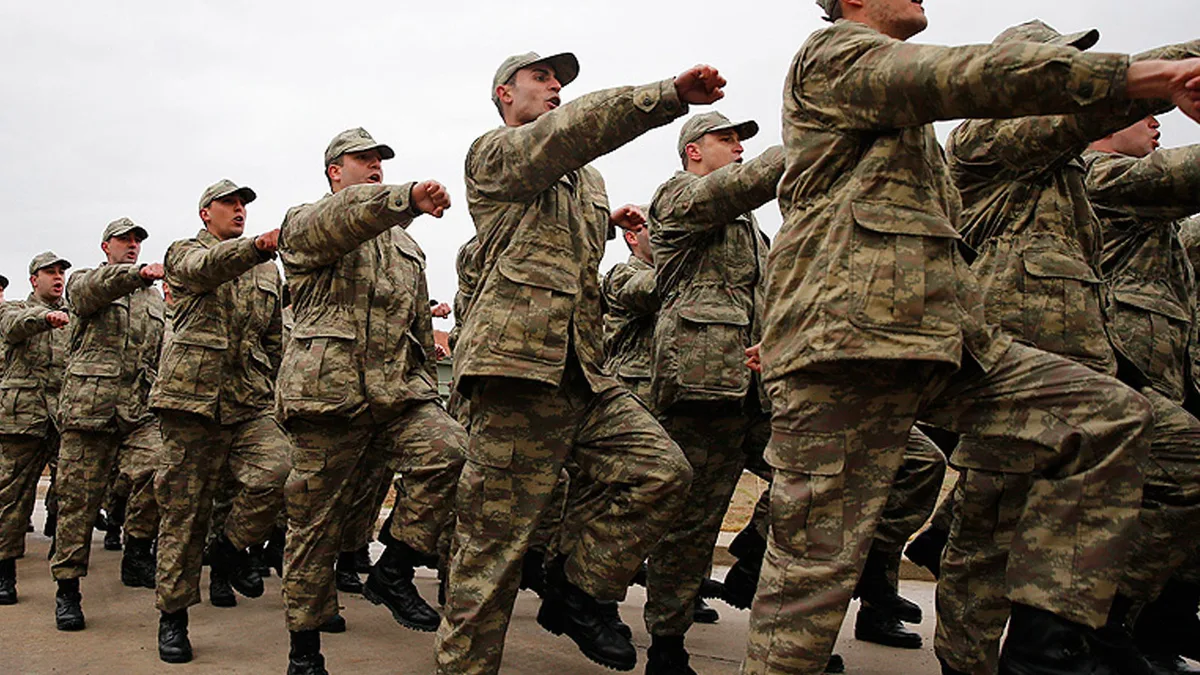
On the Turkish side, men are liable for service whether or not they also hold German citizenship. Two paid options are often confused. Bedelli askerlik is the domestic paid exemption: since July 2026 it costs 472,653.60 lira, Habertürk reports, and includes 28 days of basic training in Turkey. On October 16 Turkey's Center for Countering Disinformation (DMM) said reports that the 28 days would be scrapped were untrue and that no new decision had been taken. Dövizle askerlik (service paid in foreign currency) is for citizens living abroad, including dual nationals with at least three years (1,095 days) spent abroad. Since 2019 its fee equals the bedelli amount paid in euros or other currency, about €8,822 at July 2026 exchange rates according to Camia Haber. It is applied for at consulates, with online training. Under current rules, Germany's voluntary service does not count in Turkey: at a parliamentary subcommittee in July 2026, a Turkish foreign ministry official cited the rejected case of a German Turk who had served in Germany, Cumhuriyet reported. Before Germany suspended conscription in 2011, Turkey had recognised German military and civilian service, SPD MP Hakan Demir wrote in 2024.
Change is being discussed but is not law. Cumhuriyet reported on July 25, 2026 that a draft read out at a parliamentary subcommittee would exempt dual citizens who served, or are deemed to have served, in their country of residence; officials put the number who could benefit at about 170,000. Habertürk had linked the measure to a defence bill that passed on July 2, but its own summary of that law lists no such clause. On October 10, Karar, citing the newspaper Türkiye, reported that AK Parti's executive board had discussed a renewed proposal to end "double military service". Borsanın Gündemi wrote on October 13 that the draft had not yet been submitted to parliament. Readers should check their own situation with the Turkish consulate or Turkey's defence ministry, and with the Bundeswehr's Karrierecenter in Germany.
Could Germany bring back compulsory conscription?
Not automatically. The law contains what politicians call a needs-based conscription (Bedarfswehrpflicht): if volunteer numbers or the security situation require it, the Bundestag can activate compulsory call-ups, but only by passing a new law. Any lottery to choose who is called up is also reserved to parliament, the BMVg says. The government must report personnel numbers to the Bundestag every six months. By 2035 the ministry wants up to 460,000 personnel, 260,000 active soldiers and 200,000 reservists. On August 31, 2026 the Bundeswehr had about 186,400 active soldiers, roughly 4,000 more than a year earlier. About 11,400 people were serving in the new voluntary service, about 6% more than a year earlier. Der Spiegel reported on September 14, citing an internal statistic, that around 30% of volunteer applicants had been rejected as unfit.
Why does the government say Germany needs the law?
The BMVg justifies the reform with what it calls a sharply worsened threat situation in Europe since Russia's full-scale war against Ukraine, and with national and alliance defence. Its 2025 review links the personnel goal to NATO's new capability targets agreed at the Hague summit in June 2025, where allies also pledged to raise defence spending to at least 3.5% of GDP. Public opinion leans toward some form of obligation, but young people are more sceptical: a YouGov poll for dpa published in June 2025 found 54% support for reintroducing conscription overall, but only 35% among 18- to 29-year-olds. A t-online reader debate in October 2026, in which 90% of 335 participants backed conscription, was self-selected and not representative.
Who is protesting, and how many people took part?

The September 25 strike was organised by the alliance "Schulstreik gegen Wehrpflicht" (School Strike Against Conscription). Its spokesman Bela Breitner told dpa the government was moving toward conscription step by step, pointing to the questionnaires and the compulsory screenings that had brought the July 2027 start forward in practice. The more-than-45,000 figure comes from the organisers. Police counts reported by ZDF were 2,400 in Berlin, 700 in Munich, 400 in Nuremberg, 200 in Stuttgart and 180 in Frankfurt. WDR described turnout in North Rhine-Westphalia as lower than at earlier strikes. Berlin police said the march in Wedding was largely peaceful, but they later raised their count to 16 arrests, citing pyrotechnics, banners and chants, Tagesspiegel reported.
Protests continued into October. The band K.I.Z. played an anti-conscription rally at the Brandenburg Gate on October 2 that Tagesspiegel put at about 3,000 people. On October 3, German Unity Day, about 5,800 people marched against rearmament and conscription in Berlin according to police; organisers claimed more than 20,000, a figure Tagesspiegel's reporter considered too high. Deutschlandfunk reported a further demonstration in Stuttgart the same day.
How many young Germans are refusing military service?
The right to refuse armed service on grounds of conscience is in Germany's Basic Law and is unchanged by the new law, but objecting does not exempt men from the questionnaire or the Musterung. Applications have surged. The Federal Office for Family and Civil Society Tasks (BAFzA) registered 3,879 in all of 2025, 5,862 by the end of June 2026 and 12,102 by the end of August, according to figures its spokeswoman gave to RND and Funke. The Funke newspapers reported on October 17 that the total had reached 14,977 by the end of September, almost four times the 2025 figure. Many are misdirected: they must first go to the Bundeswehr's personnel office, which forwards them.
What happens next?
The Bundeswehr is building its 24 screening centres for compulsory screening of the whole 2008 cohort from July 1, 2027, and will keep reporting recruitment figures to the Bundestag every six months. These reports decide whether pressure builds for a vote on needs-based conscription. Family Minister Karin Prien (CDU) said on October 7 that she would present a bill within weeks to expand voluntary civilian services, including a de facto legal entitlement to a place and better pay, without any obligation; Die Linke called it a recruitment tool. In Turkey, the next step is whether the dual-citizen proposal is formally submitted to parliament and passed.
Sources
- Bundesministerium der Verteidigung — Neuer Wehrdienst für Deutschland
- Bundesministerium der Verteidigung — Bundeswehr weiter auf gesetzlich festgelegtem Aufwuchspfad
- Deutscher Bundestag — Namentliche Abstimmung: Wehrdienst-Modernisierungsgesetz
- Auswärtiges Amt — Wehrdienst und Bundesfreiwilligendienst
- ZDFheute — Schüler-Protest gegen Wehrpflicht: Zehntausende auf der Straße
- Tagesspiegel — Dreimal so viele Anträge wie 2025: Zahl der Kriegsdienstverweigerer steigt sprunghaft an
- Cumhuriyet — Yurtdışındaki Türklere askerlik muafiyeti netleşiyor: 170 bin kişi yararlanabilecek
- Karar — Zorunlu askerlikte yeni düzenleme: Çifte vatandaşlara ikinci kez askerlik kalkıyor
- TRT Haber — Bedelli askerlikte 28 günlük temel askerlik eğitiminin kaldırılacağı iddiası yalanlandı
- Cupure — Students Nationwide Protest Against Potential Military Draft in Germany
- Cupure — Hundreds Protest Against Mandatory Military Service in Berlin
- Cupure — Turkey Considers Military Service Exemption for Dual Citizens Completing Service Abroad
- Cupure — Turkey’s DMM Says 28-Day Military Training for Paid Service Will Continue
- Cupure — Turkey Announces New Conscription Fee for Second Half of Year