
Germany's 1 January 2027 Changes: Minimum Wage €14.60, Minijob €633, Kindergeld, Pensions
What changes for households in Germany on 1 January 2027 — minimum wage €14.60, Minijob limit €633, Kindergeld, tax-free allowance, contribution ceilings, Deutschlandticket and CO2 price — and which items are decided and which are still pending.
Several amounts that affect German households change on 1 January 2027. The statutory minimum wage rises from €13.90 to €14.60 gross per hour, the Minijob earnings limit from €603 to €633 a month and the Deutschlandticket from €63 to €66.80; all three are decided. Other changes are planned but not yet law as of 15 November 2026: the Einkommensteuerreformgesetz 2027, which raises Kindergeld from €259 to €267 per child and the tax-free allowance (Grundfreibetrag) from €12,348 to €12,564, drew strong criticism at a Bundestag Finance Committee hearing on 4 November and has no published date for its final vote, while the higher social-insurance contribution ceilings, the CO2 price corridor and the Frühstartrente are on the agenda of the Bundesrat's 20 November session. The health ministry has set the average additional health contribution for 2027 at 2.9%. Pensions are next adjusted on 1 July 2027; the Deutsche Rentenversicherung's spring 2026 estimate of +4.4% is a forecast, not a decision. This page lists each change, its status and the dates ahead.
Key changes on 1 January 2027 (status as of 15 November 2026): Minimum wage: €14.60 per hour, up from €13.90 (decided by ordinance). Minijob limit: €633 a month, up from €603 (decided). Employers' health-insurance flat contribution for commercial Minijobs: from 13% to 17.5% (law in force; average additional rate set at 2.9% on 30 October). Deutschlandticket: €66.80 a month, up from €63 (decided). Kindergeld: €267 per child a month, up from €259 (bill in the Bundestag; final vote not yet scheduled). Grundfreibetrag: €12,564, up from €12,348 (bill in the Bundestag; final vote not yet scheduled). Pension contribution ceiling: €8,850 a month, up from €8,450; health and care: €6,375, up from €5,812.50 (cabinet-approved; on the Bundesrat agenda for 20 November). Care-insurance surcharge for childless members: 0.9%, up from 0.6% (bill in the Bundestag since 5 November). CO2 price on fuels and heating: corridor of €55–65 per tonne, as in 2026 (passed by the Bundestag on 15 October; on the Bundesrat agenda for 20 November). Average additional health contribution: 2.9%, unchanged (set by the health ministry on 30 October). Fuel-tax cut of 14 cents per litre: scheduled to end on 31 December 2026; a draft fuel price-cap law (Kraftstoffhöchstpreisgesetz) has not yet been approved by the cabinet.
How high is the minimum wage in 2027, and what changes for Minijobs?
The rise to €14.60 is the second step of the Mindestlohnkommission's recommendation of 27 June 2025, adopted by the government in the Fifth Minimum Wage Adjustment Ordinance, according to the labour ministry (BMAS); it follows €13.90 in 2026. Employees already paid more have no automatic claim to the 70-cent rise. The Minijob limit is tied to the minimum wage (× 130 ÷ 3, rounded up), which gives €633, according to the Minijob-Zentrale, or about 43 hours a month (own calculation); the Midijob band (Übergangsbereich) then runs from €633.01 to €2,000, as payroll guide lohn-info lists it. Employers pay more: under the GKV-Beitragssatzstabilisierungsgesetz, published on 29 July 2026, the health flat rate for commercial Minijobs moves from 13% to the general rate of 14.6% plus the average additional rate, which the health ministry set at 2.9% on 30 October, giving 17.5%. Not final are a rise in the Minijob flat-rate tax from 2% to 5% in the tax bill and a 3.6% care contribution from 1 January 2028 in the care-reform draft. A government pension commission recommended in June 2026 ending Minijobs' special status; CSU leader Markus Söder said in July that Minijobs would remain.
Kindergeld 2027, Kinderfreibetrag and income tax: what is planned?
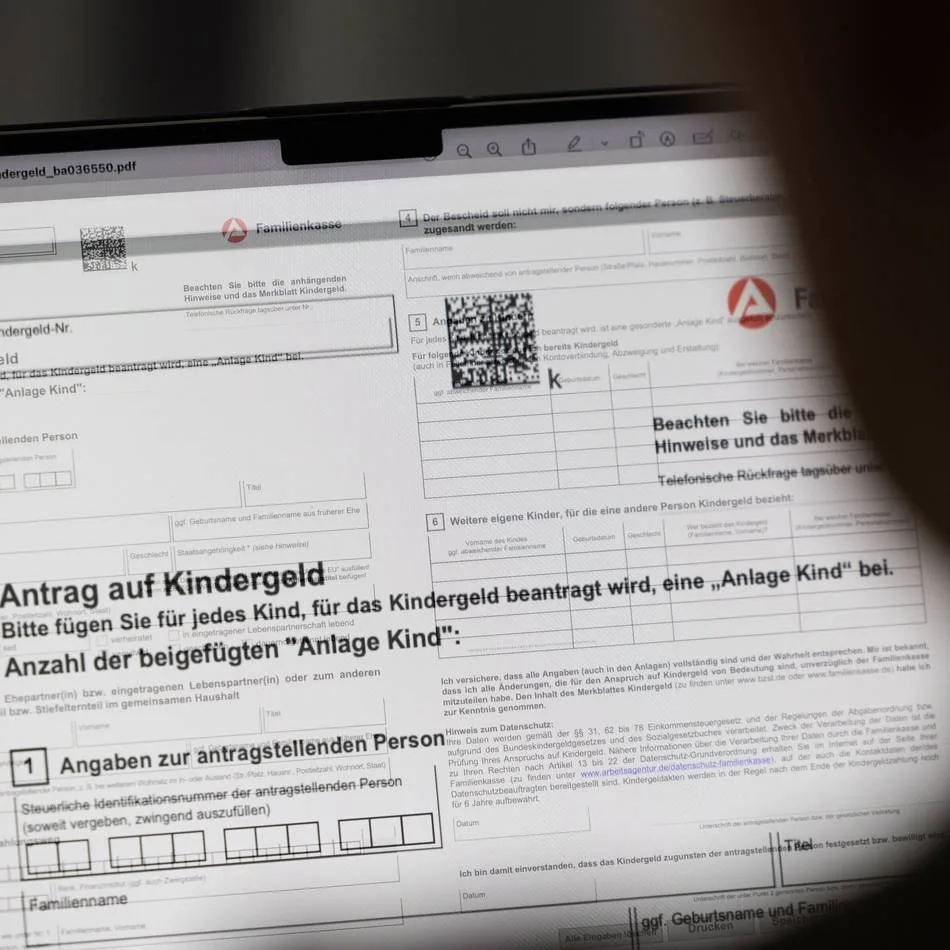
The government bill for the Einkommensteuerreformgesetz 2027 (Bundestag printed paper 21/8235) raises Kindergeld from €259 to €267 per child per month from January 2027 and to €272 from January 2028. The child allowance (Kinderfreibetrag) rises from €6,828 to €7,128; together with the €2,928 allowance for care and education, the tax-free amount per child goes from €9,756 to €10,056, according to the Bundestag. The cabinet approved it on 2 September 2026 and the first reading was on 8 October. The Bundesrat gave its opinion on 16 October, objecting mainly to points on Sunday and holiday pay supplements and on trade tax for data centres. At the Finance Committee hearing on 4 November, the Bund der Steuerzahler put the real relief at no more than €7 billion rather than €10 billion, and the ZEW institute said that for 98% of taxpayers the relief falls short of offsetting inflation. As of 15 November no date for the final votes had been published, the bill was not on the Bundestag's agenda for 24–27 November, and amounts can change. Already passed is a separate law on automatic Kindergeld, approved by the Bundesrat on 25 September: from 2027 the Familienkasse is to pay without an application, first for families already receiving Kindergeld for an older child and later for first-born children (the finance ministry describes a first stage in spring 2027 and an extension to all newborns, including first-born children, towards the end of 2027), provided it has the child's tax ID, bank details and no doubts about entitlement, dpa reported. For a first child, at least one parent must live with the child in Germany and one must work in Germany.
In the same bill, the Grundfreibetrag rises from €12,348 to €12,564 in 2027 and €12,900 in 2028, and the tariff is flattened for taxable incomes between €17,800 and €70,600, according to the federal government. The employee lump sum (Arbeitnehmer-Pauschbetrag) rises from €1,230 to €1,430, while the deduction for tradespeople's services falls from 20% to 15%. The top rate of 45% would start at €250,000 of taxable income, with a new 47% rate from €280,000. The government puts the relief at about €10 billion a year; a family with two children and €60,000 taxable income would save over €600 a year from 2028. Business groups criticised the cabinet decision, Deutschlandfunk reported, and the Greens tabled a motion on the gap between Kindergeld and the child allowance.
What happens to social contributions and pensions in 2027?
The cabinet adopted the Sozialversicherungsrechengrößen-Verordnung 2027 on 7 October 2026, based on 2025 wage growth of 4.38%. The pension contribution ceiling rises to €8,850 a month (€106,200 a year), and the ceiling for health and care insurance to €6,375 a month (€76,500 a year), which includes an extra €300 linked to the GKV stabilisation law. The income threshold for compulsory health insurance rises from €77,400 to €84,150 a year. The Bundesrat is due to vote on the ordinance on 20 November. Following the GKV estimating group's result of 14 October, the health ministry set the average additional health contribution for 2027 at 2.9% on 30 October, unchanged from 2026; Health Minister Carsten Linnemann attributed this mainly to the GKV stabilisation law, and each fund sets its own rate. The general care contribution stays at 3.6%, while the care reform bill (Pflegeneuordnungsgesetz), which had its first Bundestag reading on 5 November, would raise the surcharge for childless members from 0.6 to 0.9 points, to 4.5% in total; the Bundesrat gives its opinion on 20 November and the final votes are reportedly planned for December. The pension contribution rate for 2027 is not yet fixed by ordinance as of 15 November: Haufe reported on 10 November that drawing on the reserve keeps it at 18.6% through 2027, while the 2025 pension bill had projected 18.8% (dpa, August 2025).
Pensions rose by 4.24% on 1 July 2026. For 1 July 2027 the Deutsche Rentenversicherung Bund's spring 2026 financial estimate projected an increase of 4.4%; the actual figure follows from wage data in spring 2027 and is set by ordinance with Bundesrat consent. Separately, the Bundestag passed the Frühstartrente on 16 October, a state-funded €10 monthly pension contribution for children; it still needs the Bundesrat's consent, due to be voted on on 20 November, before it can start in 2027, and Chancellor Friedrich Merz said in October that the vote on the wider pension reform may slip to spring 2027.
What else changes, and what happens next?
The Deutschlandticket costs €66.80 from 1 January, the first price set by an index formula (confirmed 30 September). The CO2 price on petrol, diesel, heating oil and gas stays in a corridor of €55–65 per tonne in 2027 under a Brennstoffemissionshandelsgesetz amendment the Bundestag passed on 15 October (303 to 210, 52 abstentions; the Bundesrat takes it up on 20 November), because the EU's ETS2 for buildings and transport was postponed to 2028. The energy-tax cut on petrol and diesel of 14 cents per litre, up to 17 cents including VAT, runs from 1 October to 31 December 2026; state premiers urged a fuel price cap on 22 October, and the economy ministry's draft Kraftstoffhöchstpreisgesetz would allow a cap only if German petrol or diesel prices rise more than 5 percentage points faster than the EU average for three weeks in a row, and for at most three months; the cabinet had not approved it as of 2 November, ZDF reported, and the finance ministry has since pressed for tougher rules. The Grundsicherungsgeld rate for a single adult, €563 since January 2024, had not been set for 2027 as of 15 November; the Haushaltsbegleitgesetz 2027, which changes how the rate is updated, is due for its final Bundestag vote on 27 November, and the Paritätischer welfare association warned on 7 October of a third year without an increase, Stuttgarter Zeitung reported.
Dated milestones: 20 November: the Bundesrat votes on the 2027 contribution ceilings, the CO2 price corridor and the Frühstartrente, and gives its opinion on the care reform. 27 November: final Bundestag vote on the Haushaltsbegleitgesetz 2027. December: health funds announce their own additional rates for 1 January; final votes on the care reform reportedly planned for 11 December (Bundestag) and 18 December (Bundesrat). Before 1 January 2027: Finance Committee report and final Bundestag and Bundesrat votes on the Einkommensteuerreformgesetz 2027 (dates not published as of 15 November). 1 January 2027: minimum wage, Minijob limit, Minijob health contribution, Deutschlandticket price and CO2 corridor take effect. Spring 2027: pension adjustment fixed; first stage of automatic Kindergeld. 1 July 2027: pension increase. 1 January 2028: Kindergeld €272 and Grundfreibetrag €12,900 under the bill, ETS2 start.
Sources
- BMASFünfte Mindestlohnanpassungsverordnung (MiLoV5)de
- Minijob-ZentraleMehr Verdienst im Minijob: Mindestlohn steigt 2026 und 2027de
- Minijob-ZentraleAktuelle Minijob-Vorhaben (1 Oct 2026)de
- BundesregierungEinkommensteuerreform beschlossen (2 Sep 2026)de
- Deutscher BundestagErste Lesung Einkommensteuerreformgesetz 2027 (8 Oct 2026)de
- BundesregierungBeitragsbemessungsgrenzen sollen ab 2027 steigen (12 Oct 2026)de
- Deutsche RentenversicherungBeitragsbemessungsgrenzen 2027 sollen steigen (8 Oct 2026)de
- Deutscher BundestagBrennstoffemissionshandelsgesetz: CO2-Preiskorridor 2027 (15 Oct 2026)de
- Deutscher Bundestaghib 692/2026: BEHG-Änderung (8 Sep 2026)de
- Der Tagesspiegel (dpa)Eltern sollen Kindergeld ohne Antrag bekommen (25 Sep 2026)de
- t-onlineErste Hilfe für Pflege: Warum Kinderlose mehr zahlen sollen (30 Sep 2026)de
- gegen-hartz.deRentenerhöhung 2027: Prognose (5 Jun 2026)de
- Stuttgarter Zeitung (dpa)Gesetzentwurf: Rentenbeitrag steigt 2027 auf 18,8 Prozent (6 Aug 2025)de
- Stuttgarter ZeitungGibt es 2027 mehr Grundsicherung? (14 Oct 2026)de
- lohn-info.deGeplante Sozialversicherungsbeiträge 2027de
- BMGZusatzbeitragssatz bleibt auch 2027 stabil (30 Oct 2026)de
- BundesratRückblick auf die Plenarsitzung am 16. Oktober 2026de
- Deutscher BundestagAnhörung zum Einkommensteuerreformgesetz 2027 (4 Nov 2026)de
- Deutscher BundestagBundestag beschließt die Frühstartrente (16 Oct 2026)de
- BMASBundeskabinett beschließt Sozialversicherungsrechengrößen 2027de
- Stuttgarter ZeitungWie es nach dem Ende des Tankrabatts weitergeht (30 Oct 2026)de
- Bundesratagenda of the 1070th session, 20 Nov 2026de
- Deutscher Bundestaghib 889/2026: hearing on the Einkommensteuerreformgesetz 2027 (4 Nov 2026)de
- Deutscher Bundestagagenda of sessions 110–113 (24–27 Nov 2026)de
- Deutscher Bundestagfirst reading of the Pflegeneuordnungsgesetz (5 Nov 2026)de
- BMFMonthly report March 2026: Kindergeld without applicationde
- HaufePension contribution rate 2027 (10 Nov 2026)de
- ZDFheuteHigh thresholds planned for the fuel price cap (2 Nov 2026)de
- CupureGerman Unions Estimate 64 Billion Euros Lost to Minimum Wage Fraud Over Ten Yearsen
- CupureParents to Receive Child Benefit Automatically Without Application Starting 2027en
- CupureGerman Government Approves Income Tax Reform Amid Economic Criticismen
- CupureHealth and Pension Contributions to Increase for High Earners in Germanyen
- CupureGermany’s Statutory Health Insurance Surcharge Expected to Stay at 2.9% in 2027en
- CupureGovernment Reaches Last-Minute Agreement on Nursing Care Insurance Contributions for Childless Individualsen
- CupureNew Price for Germany's Deutschlandticket to Be Announced Todayen
- CupureGerman Government Approves Fuel Tax Reduction Until Year-Enden