Who Will Replace Lagarde? How the Next ECB President Is Chosen Before February 2027
Why Christine Lagarde is leaving the European Central Bank on 7 February 2027, how EU leaders pick her successor under Article 283, who the candidates are, why Schnabel's and Lane's seats are part of the deal, and the key dates ahead.
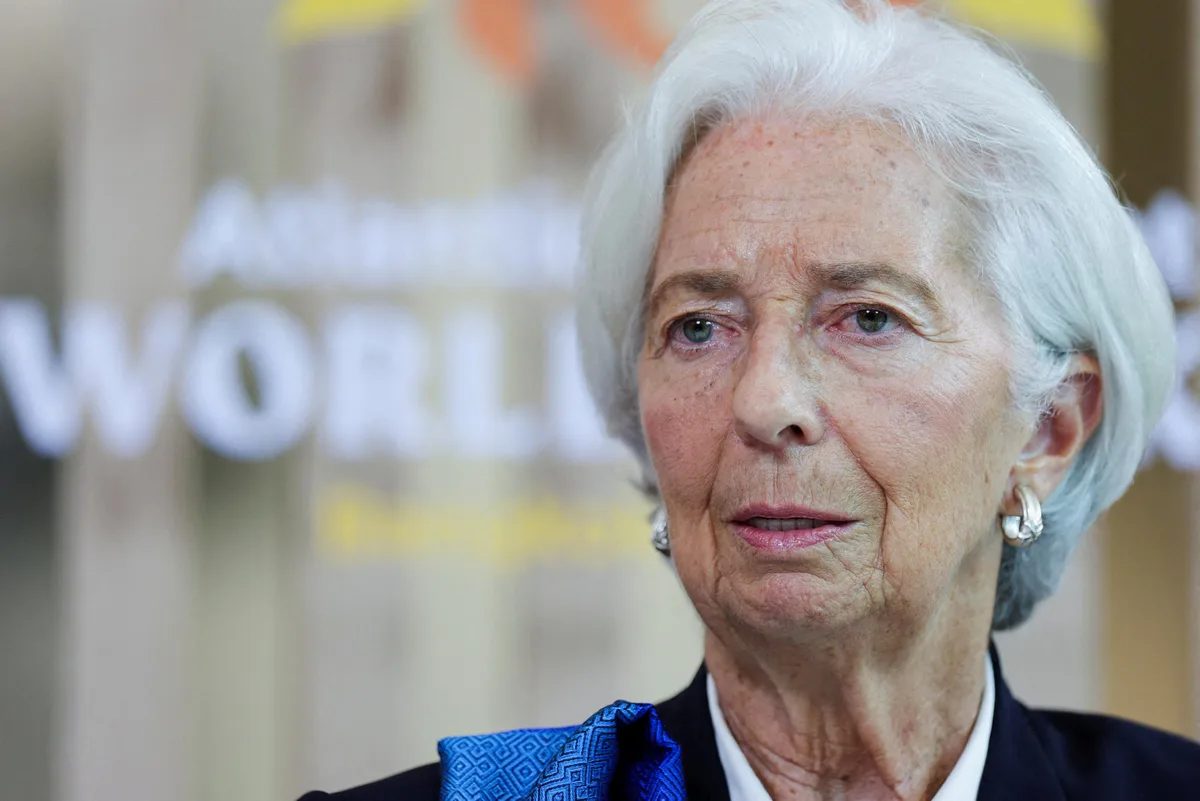
Christine Lagarde will step down as President of the European Central Bank (ECB) on 7 February 2027, the ECB announced on 29 October 2026. Her eight-year term began on 1 November 2019 and was due to run until 31 October 2027, so she is leaving almost nine months early. Her successor will be appointed by the European Council under Article 283 of the Treaty on the Functioning of the European Union, and European Council President António Costa said the process would start that same day. Two former central bank governors, Spain's Pablo Hernández de Cos and the Netherlands' Klaas Knot, are most often named as frontrunners. Because two other Executive Board members, Isabel Schnabel and Philip Lane, also leave in 2027, governments are expected to negotiate the posts as a package.
Why is Christine Lagarde leaving the ECB early?
The ECB's statement gave no reason. It said only that Lagarde had informed the Governing Council and Costa, and that the Council thanked her with a long standing ovation. At the press conference after that day's rate decision, Lagarde said she wanted freedom of speech and expression on matters beyond monetary policy, adding: "I don't think that I can remain neutral." A source quoted by Reuters said she resigned so she could weigh in on political matters in France and globally, which an ECB president is expected to avoid to protect the bank's independence.
The timing is widely linked to France's presidential election, set for 18 April 2027 with a run-off on 2 May. The Financial Times reported in February 2026 that Lagarde wanted to leave early so that Emmanuel Macron, who cannot run again, and German Chancellor Friedrich Merz could shape the succession before the vote; polls covered by Cupure in September showed Marine Le Pen in the lead. According to Euronews, Lagarde said in July that she was "not a candidate for anything". Reuters reported in October that the World Economic Forum could name her as its head, but neither she nor the forum has confirmed this.
How is the ECB president chosen?
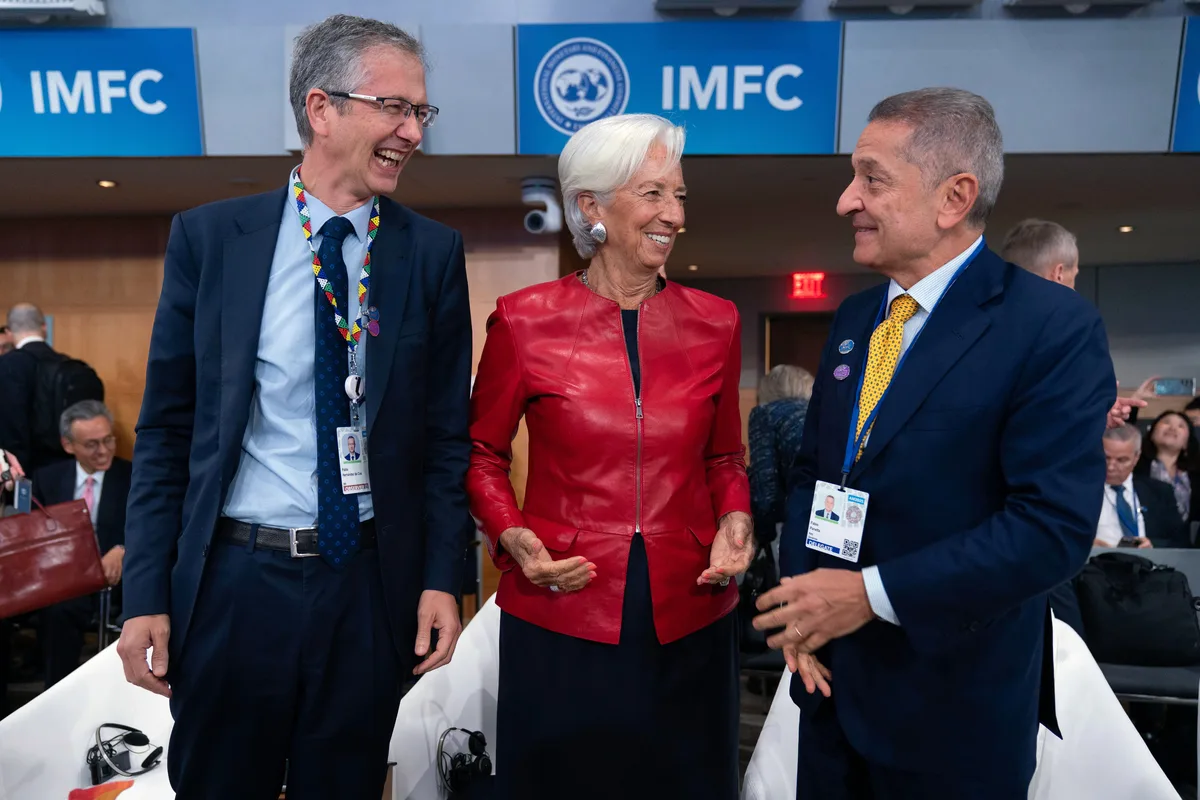
The rules are in Article 283(2) of the Treaty. The President, the Vice-President and the four other members of the Executive Board are appointed by the European Council, acting by qualified majority, on a recommendation from the Council of the EU. Before that recommendation, the Council must consult the European Parliament and the ECB's Governing Council. Candidates must be people of recognised standing and professional experience in monetary or banking matters, and the term is eight years and cannot be renewed.
In practice only the 21 euro-area countries decide. Finance ministers in the Eurogroup discuss the names and agree on one candidate, the recommendation goes to Parliament and the Governing Council for their opinions, and the leaders then make the appointment. Spanish daily 20minutos reports that the decision needs the support of at least 16 of the 21 euro-area countries and that leaders aim to settle it at the European Council summit on 17–18 December 2026. That date is a political target, not a legal deadline; if talks drag on, the appointment could slip to January or early February 2027.
Who are the candidates to replace Lagarde?
Pablo Hernández de Cos, a former governor of the Bank of Spain and general manager of the Bank for International Settlements since 2025, is Spain's first ever candidate for the post; Euronews says Madrid nominated him in July. Prime Minister Pedro Sánchez publicly backed him in September, and opposition leader Alberto Núñez Feijóo also supports him. In a Bloomberg survey published on 23 October, 12 economists named him the most likely successor, against nine for Klaas Knot.
Knot led the Dutch central bank from 2011 to 2025 and has the public support of Dutch Prime Minister Rob Jetten, who praised his pragmatism. Bundesbank President Joachim Nagel has also signalled ambitions, according to the German news agency dpa; Germany has never held the ECB presidency. National balance matters too: 20minutos notes that Spain already heads the European Investment Bank through Nadia Calviño, while Euronews points out that a Knot presidency would probably mean Dutch board member Frank Elderson stepping aside, since countries usually hold one seat each.
Why are Schnabel's and Lane's seats part of the same deal?
Half of the six-member Executive Board changes within five months. Isabel Schnabel, the German member in charge of market operations, leaves on 3 January 2027 to join the International Monetary Fund, and chief economist Philip Lane's term ends on 31 May 2027, according to the ECB's terms-of-office list. Eurogroup President Kyriakos Pierrakakis first set 28 October as the deadline for candidates for Schnabel's seat; Euronews reports it has been extended to 27 November. German Finance Minister Lars Klingbeil said in October that he was agreeing with the Chancellor which German name to put forward for which post. Euronews reports that Germany wants to keep market operations and France is expected to aim for the chief economist job.

What does Lagarde's exit mean for interest rates and the euro?
Rates are set by the whole Governing Council, not by the president alone. On the day of the announcement it left the deposit rate at 2.50%, the main refinancing rate at 2.65% and the marginal lending rate at 2.90%, after two increases earlier in 2026. Euro-area inflation was 3.8% in September, up from 3.2% in August, with energy prices 18.9% higher. The ECB said it is not committing to any rate path, and German broadcaster n-tv and France's BFM TV reported that markets expect another increase in December. Piet Haines Christiansen of Danske Bank told Reuters that the rumoured successors are both well-established central bankers, so for markets the choice "won't matter too much".
What happens between now and 7 February 2027?
Key dates: 27 November 2026, extended deadline for candidates for Schnabel's seat; 17 December, ECB rate decision; 17–18 December, European Council summit, the leaders' target for agreeing a successor according to 20minutos; 3 January 2027, Schnabel leaves for the IMF; 4 February, the last rate meeting chaired by Lagarde; 7 February, Lagarde steps down; 18 March, the first rate meeting after her exit; 18 April and 2 May, French presidential election; 31 May, Lane's term ends; 31 October 2027, the original end of Lagarde's term. The ECB has not said who would chair the bank if no successor is in place by 7 February.
Sources
- ECBPress release: Christine Lagarde to step down as ECB President (29 October 2026)en
- ECBMonetary policy statement and Q&A, press conference of 29 October 2026en
- ECBMonetary policy decisions (29 October 2026)en
- ECBExecutive Board members' terms of officeen
- ECBCalendar of Governing Council meetingsen
- EUR-LexTreaty on the Functioning of the European Union, Article 283en
- Service-Public.fr2027 presidential election: dates of both roundsfr
- EuronewsECB President Christine Lagarde to step down in February, months before her term ends (29 October 2026)en
- 20minutosLagarde's succession: who, how and when the replacement is chosen (29 October 2026)es
- t-online / dpaRace for the ECB top job: Klingbeil plans personnel proposal (October 2026)de
- La RazónBloomberg survey: Hernández de Cos favourite among economists to lead the ECB (23 October 2026)es
- Rappler / ReutersECB President Christine Lagarde resigns (29 October 2026)en
- CupureChristine Lagarde to Step Down as ECB President on February 7, 2027en
- CupureECB Holds Key Interest Rate at 2.5% Despite Persistent Inflationen
- CupurePablo Hernández de Cos Leads Economist Survey as Favorite to Succeed Christine Lagarde at ECBen
- CupureChristine Lagarde Could Leave ECB Early to Lead World Economic Forumen
- CupureKlingbeil Plans Personnel Proposal for ECB Leadership as Positions Openen
- CupureIsabel Schnabel to Leave ECB in January for IMF Positionen
- CupureECB President Lagarde Considers Early Resignation Amid Speculationen
- Cupure2027 Presidential Election: Marine Le Pen Leads in Polls Against Mélenchon and Philippeen