
El Niño 2026: How Strong It Is, When It Peaks and What It Means by Region
How strong the 2026–27 El Niño is according to NOAA, WMO, JMA and Australia's Bureau of Meteorology, when it is expected to peak and end, how it compares with 1997–98 and 2015–16, and what it means for the Americas, Africa, Asia, Australia and Europe.
The El Niño that began in mid-2026 is on course to be one of the strongest since reliable records began around 1950. The US National Oceanic and Atmospheric Administration (NOAA) declared it on 11 June 2026, and the World Meteorological Organization (WMO) said on 8 October that it would keep intensifying until a peak in December, with a near-100% chance of lasting through February 2027. Its fingerprints are already visible: Copernicus ranked August 2026 the hottest month ever measured, the Panama Canal has cut ship transits, California and several Latin American countries have declared emergencies, and researchers project hundreds of thousands of extra heat deaths before the event fades.
What is El Niño, and how strong is this one?
El Niño is the warm phase of a natural Pacific cycle: trade winds weaken, warm water spreads east along the equator and rearranges rainfall and temperature patterns worldwide. Strength is gauged by the sea-surface temperature anomaly in the Niño 3.4 region of the central Pacific. WMO puts that anomaly at +1.6°C in June and +2.5°C in August 2026, and its consensus of 13 forecasting centres expects about +3.7°C on average for October–December. The Japan Meteorological Agency (JMA) reported on 9 October that its monitored region was about 4°C above normal, the highest in records dating to 1949. Australia's Bureau of Meteorology recorded a weekly relative Niño 3.4 value of +2.02°C in the week to 2 August, its first reading above +2.0°C since February 2016.
The agencies do not use identical indices, so their numbers differ. NOAA's 8 October discussion listed the past month's Niño 3.4 anomaly at +2.1°C, with Niño-3 at +3.0°C and the coastal Niño 1+2 region at +3.9°C; since February 2026 NOAA rates events with a relative index (RONI) that subtracts warming of the wider tropics, which yields lower values. On that index NOAA gives an 83% chance that October–December reaches +2.5°C or more, a level it would class as historic. The trend in NOAA's odds is telling: 69% in August that this would be the strongest event since 1950, 75% in September. Comparison with the two benchmark 'super' events depends on the yardstick. WMO cites a previous Niño 3.4 seasonal record of +2.6°C in November 2015–January 2016, while a September analysis of ECMWF forecasts cited a monthly record of +2.8°C in November 2015. JMA said its earlier record of 3.7°C dated from December 1997. Ecuador's risk management ministry has said it expects the current episode to exceed 1982, 1997 and 2015. WMO itself stops short of calling it a 'super El Niño', noting that the term is not a WMO classification.
Timeline: 11 June – NOAA issues an El Niño Advisory. Mid-June – Australia's Bureau of Meteorology declares El Niño. 31 July – WMO says El Niño will strengthen through autumn. 25 August – Panama declares a state of emergency and El Salvador a maximum alert. 29 August – Ecuador declares a nationwide red alert. 3 September – WMO calls the event 'firmly established' and heading for 'very strong'. 10 September – Copernicus reports August 2026 as the hottest month on record, at 16.96°C. 21 September – California declares a state of emergency. 8 October – WMO forecasts a December peak. 9 October – JMA reports a record anomaly.
What does El Niño 2026 mean region by region?
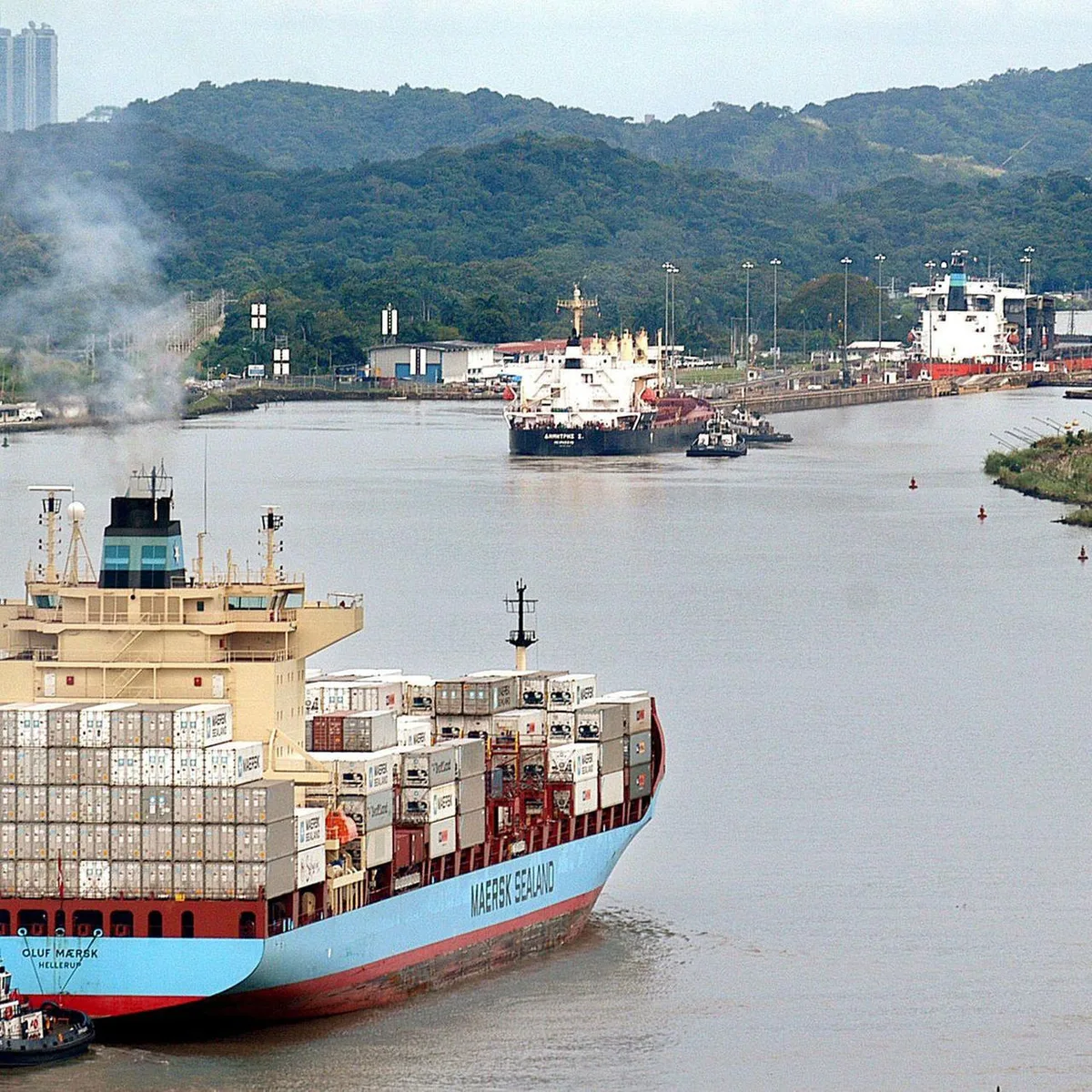
Americas: WMO's outlook points to a wetter western North America south of 45°N and south-eastern South America, and a drier southern Central America, Caribbean and north-western South America. The Panama Canal Authority reduced daily transits from 36 to 34 on 3 September and to 32 in mid-September, with Turkish press reporting a further cut to 29.5 from November; one shipper bid a record $5.3 million for priority passage. California Governor Gavin Newsom declared a state of emergency on 21 September ahead of expected winter storms. The United States plans to station the hospital ship USNS Comfort off Peru in February 2027. In Brazil, fires around Manaus were more than 300% above the previous year, according to Der Spiegel.
Africa and South/Southeast Asia: WMO expects wetter conditions in the Greater Horn of Africa and drier conditions on the Indian subcontinent, while AP-reported analysis names southern Africa among the worst-affected areas. In Indonesia, wildfire haze has drifted into Malaysia and pushed schools to remote learning. India, Vietnam and Thailand, the three largest rice exporters, are considered exposed, as are Indonesia and Malaysia, which supply about 85% of the world's palm oil. The UN World Food Programme warns that at least 49 million more people could face acute food insecurity by the end of 2027.

Australia and Europe: the Bureau of Meteorology forecast below-average rain across most of eastern Australia and above-normal temperatures for August–October, with higher drought, bushfire and poor snow-season risks. For Europe, WMO's outlook leans wetter in the south and drier in the north. The UK Met Office said a warm, wet autumn was 1.5 to 2 times more likely than usual, with greater flood risk. In Turkey, Prof. Doğan Yaşar of the Turkish Academy of Sciences (TÜBA) has predicted record rainfall in 2027, an individual forecast rather than an agency outlook. Copernicus said Western Europe's summer of 2026 beat the 2003 record.
How many deaths could El Niño cause, and what will it cost?
The Climate Impact Lab, linked to the University of Chicago, estimates about 451,000 additional heat-related deaths worldwide from June 2026 to February 2027, including roughly 239,000 between September and February, with Africa's Sahel and South Asia worst hit and about 3,500 in the United States. Some outlets rounded this to 'half a million'. The report is not yet peer-reviewed. Markets are already reacting: corn reached $5.2425 a bushel in late August, a three-year high, and cocoa hit $6,771 a tonne in early September. Goldman Sachs has said food commodity prices could rise more than 15%; a figure of up to $10 trillion in global losses circulating in Turkish media was not attributed to a named study. Climate scientists Zeke Hausfather and Andrew Dessler estimate El Niño adds about 0.3°C to global temperatures, making 2027 a strong candidate for the hottest year on record.
What happens next: when does it end, and will La Niña follow?
WMO expects the peak in December 2026 and near-certain persistence through February 2027; NOAA gives strong-to-very-strong conditions better than an 83% chance through January–March 2027. Because El Niño's global heat lags its ocean peak, the largest temperature effect is expected in 2027. Neither NOAA nor WMO has yet published odds for what follows. ECMWF seasonal runs, as reported in September, show a weakening after the peak and a possible La Niña in the second half of 2027, with considerable uncertainty at that range. Milestones to watch: NOAA's next monthly ENSO discussion (12 November), WMO's next update, the December peak, USNS Comfort's deployment off Peru in February 2027, and Copernicus's monthly temperature bulletins.
Sources
- WMO — Sea-surface temperatures reflect strengthening El Niño (8 October 2026)
- WMO — Strong El Niño expected to intensify (31 July 2026)
- NOAA Climate Prediction Center — ENSO diagnostic discussion
- Elders Weather — 'Very strong' El Niño threshold reached for first time in over 10 years
- Phys.org (AP) — This year's El Niño on track to be strongest on record
- Phys.org (AP) — Worsening El Niño threatens Asia with drought
- TheWeather.net — El Niño 2026–2027 could reach a record-breaking peak
- KATV — El Niño heat could drive 451,000 extra deaths worldwide, report warns
- The Guardian — California declares state of emergency ahead of El Niño
- Cupure — El Niño Intensifies to 'Very Strong' Event, Expected to Last Until February
- Cupure — August 2026 Shatters Global Temperature Records, Becomes Hottest Month Ever
- Cupure — El Niño Could Lead to Nearly 500,000 Additional Deaths by February
- Cupure — California Declares State of Emergency Ahead of El Niño Arrival
- Cupure — Panama Canal to Reduce Ship Transits Due to El Niño-Induced Drought
- Cupure — El Niño Reaches Strongest Level in Records Dating to 1949, Japan Agency Says
- Cupure — Record-breaking El Niño threatens Asia with drought and global food prices