Inside Turkey's 2026 Search for Noah's Ark at the Durupınar Site
An international team spent the summer scanning and drilling a ship-shaped rock formation near Mount Ararat. Here's what the radar, soil samples and skeptics say so far.
An international team led by Turkey's Sivas Cumhuriyet University spent the summer of 2026 scanning, sampling and drilling a boat-shaped rock formation near Mount Ararat in eastern Turkey, in what organizers call the most extensive coordinated study ever carried out at the site. The formation, known as Durupınar, has drawn Noah's Ark speculation for decades — but decades of prior investigation have also concluded it is a natural geological feature. This page will be updated as laboratory results and further findings are published.
A formation first spotted from the air
The Durupınar formation was first noticed in 1959 by Turkish army captain İlhan Durupınar in aerial reconnaissance photographs. Seen from above, its symmetrical, elongated outline resembles a ship's hull, which prompted early speculation that it might be the remains of Noah's Ark. The site, located roughly 30 kilometers south of Mount Ararat, has been investigated on and off ever since, drawing researchers, amateur explorers and religious pilgrims.
The 2026 excavation
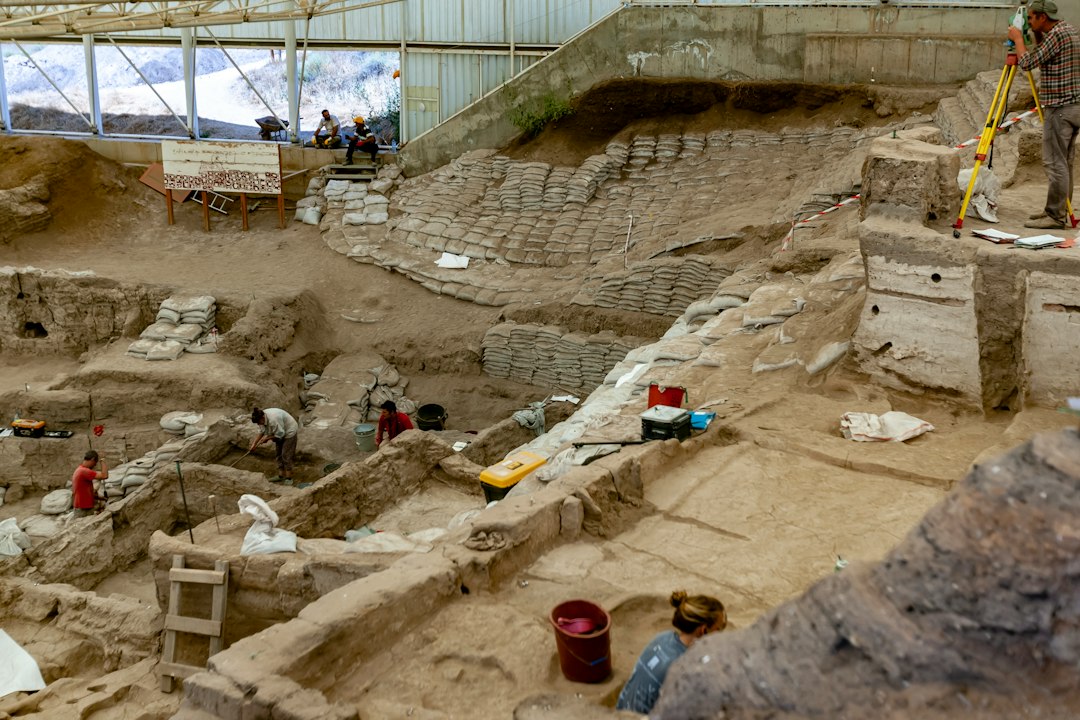
This year's fieldwork ran from June 28 to September 11 and involved about 20 scientists and students from five countries, led by Prof. Dr. Cenker Atila of Sivas Cumhuriyet University's archaeology department, with Andrew Mark Jones and Dr. Evrensel Barış Berkant as deputy leads. The U.S.-based group Noah's Ark Scans provided additional equipment and support. The team used precision GPS mapping, two- and three-dimensional digital modeling, high-resolution ground-penetrating radar, and core drilling to depths of up to 18 meters, collecting roughly 1,000 soil samples from about 150 locations across and around the formation.
What the data shows — and what it doesn't
Ground-penetrating radar detected subsurface anomalies with unusually regular edges and what researchers describe as right-angle intersections, which they say could indicate cavities or structural divisions beneath the surface. Soil samples taken from inside the formation's outline showed carbon levels around 40 percent higher than samples taken outside it, which the team says could point to degraded organic material. Excavation also turned up pottery fragments the researchers believe may predate the biblical flood narrative. Researchers involved in the project caution that none of this, on its own, confirms an archaeological structure: radar anomalies and elevated carbon readings are consistent with several natural explanations, and no worked timber, tools or other unambiguous artifacts tied to a vessel have been recovered so far.
Decades of scientific skepticism
Mainstream geologists have long offered a natural explanation for the formation's shape. A 1996 study by geologist Lorence G. Collins and explorer David Fasold, published after both had separately investigated the site, concluded that Durupınar is a "doubly plunging syncline" — a folded layer of sedimentary rock that erosion and landslides shaped into an elongated, boat-like outline. Their analysis attributed earlier claims of metal fittings and petrified wood to naturally occurring minerals such as limonite and magnetite. In the decades since, no confirmed wreckage, structural timber or authenticated shipbuilding artifact has been produced from the site, and many archaeologists and geologists categorize repeated Ark claims about Durupınar as pseudo-archaeology.
Measured science, more sensational marketing
There is a notable gap between how Sivas Cumhuriyet University describes the project and how some of its outside partners have promoted it. The university's own statements frame the work as an open question — testing whether the formation's shape is entirely geological or shows any trace of human activity — without presuming an ark exists underground. Independent researcher Andrew Jones and the project's U.S. promotional team, including marketing director Lauren Witzke, have made far bolder claims in public statements and social media, at one point describing the site as "100 percent confirmed" as Noah's Ark and suggesting the findings would "dismantle Darwinism" and force a rewrite of university curricula. As of this writing, the laboratories analyzing the 2026 samples have not published results, and no evidence released so far substantiates those broader claims.
What happens next
Laboratory analysis of the 2026 soil and core samples is expected to continue through the winter, with the university planning to publish its findings as "Durupınar Formation 2026 Research" alongside three international conference presentations. A more comprehensive report, drawing on a second season of fieldwork, is targeted for 2027. Cupure will update this article as new results, publications or independent assessments become available.
Sources
- Sivas Cumhuriyet Üniversitesi — official project announcement
- Arkeonews — "Radar Finds Right-Angled Anomalies Beneath Türkiye's Famous 'Noah's Ark' Formation"
- Anatolian Archaeology — "Largest-Ever Study Begins at Türkiye's Noah's Ark-Shaped Formation"
- The Blaze — "'Darwinism will be dismantled': Core drilling at the suspected site of Noah's ark has begun"
- Britbrief — "Experts dismiss Noah's Ark claim: Durupınar formation is natural, no wreckage found"
- Living Passages — "The Durupinar Site: What the 2026 Noah's Ark Investigation Is Actually Testing"