Starship's Road to Orbit in 2026: Every Test Flight and What Flight 14 Proved
A flight-by-flight history of SpaceX's Starship from 2023 to its first orbital flight on 28 September 2026, what Flight 14 did and did not prove, and the milestones that come next.
On 28 September 2026, SpaceX's Starship reached Earth orbit for the first time on its 14th integrated test flight, launched from Starbase in South Texas. The upper stage deployed 26 Starlink V3 satellites at roughly 270–275 km, but an engine that shut down early on ascent led flight controllers to bring it home after about three hours instead of the planned ten-hour, six-orbit mission. The flight matters because NASA's Artemis lunar landings, SpaceX's next-generation Starlink network and the company's plan to retire Falcon 9 all depend on Starship working routinely in orbit — something 13 earlier suborbital tests since April 2023 had not shown.
What is Starship?
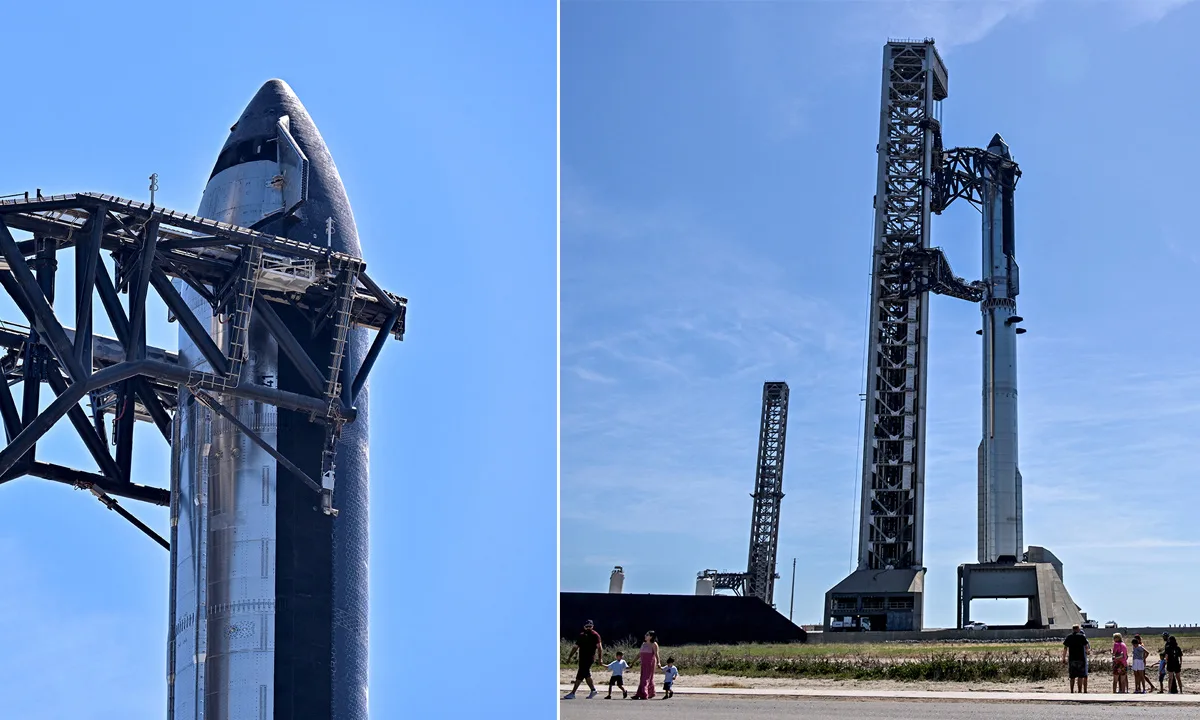
Starship is a two-stage, fully reusable launch system. The first stage, Super Heavy, carries 33 Raptor engines; the upper stage, also called Starship or simply Ship, has six. Stacked, the current Version 3 (V3) stands about 124 metres (407 feet) tall, according to the Associated Press, and AFP describes it as the largest and most powerful object ever flown. SpaceX says it is designed to lift around 100 tonnes to orbit. Both stages are meant to return: Super Heavy boosters have been caught by the launch tower's mechanical 'chopstick' arms, and SpaceX intends to catch the Ship the same way.
Every Starship test flight, 2023–2025
Flight 1 (20 April 2023) lost control and was destroyed by its termination system minutes after liftoff, badly damaging the pad. Flight 2 (18 November 2023) achieved the first hot-staging separation, but both stages were lost. Flight 3 (14 March 2024) completed a full-duration upper-stage burn and moved propellant between two tanks on the same vehicle, then broke up during reentry. Flight 4 (6 June 2024) gave both stages their first soft splashdowns. Flight 5 (13 October 2024) produced the first tower catch of a Super Heavy booster, and Flight 6 (19 November 2024) ended the Version 1 era with a controlled Indian Ocean splashdown. The Version 2 ship had a harder run: Flights 7 (16 January 2025) and 8 (6 March 2025) saw boosters caught but ships lost to leaks and engine shutdowns, and Flight 9 (27 May 2025), the first to reuse a booster, lost both stages. Flights 10 (26 August 2025) and 11 (13 October 2025) were clean: the ships deployed Starlink simulators, relit a Raptor in space and splashed down on target.

2026: Version 3 and the flight to orbit
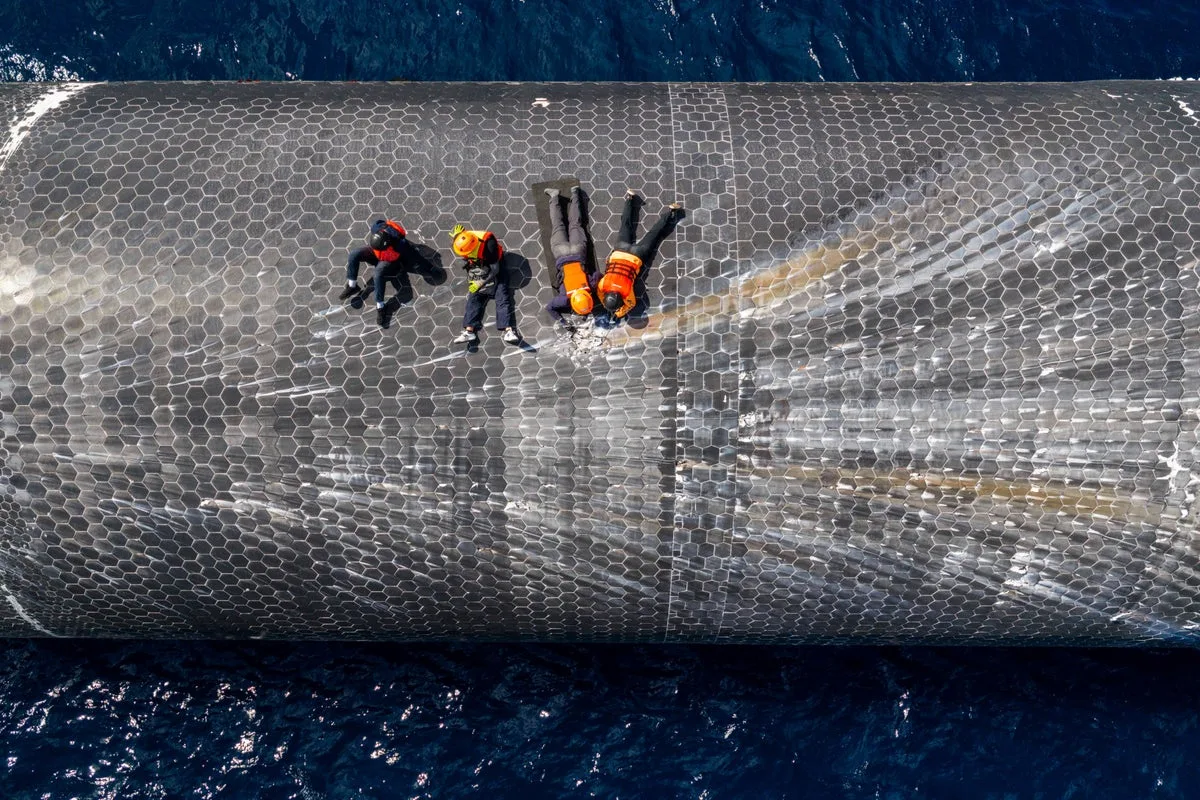
Version 3 debuted on Flight 12 on 22 May 2026, a day after a scrubbed attempt and weeks before SpaceX's record June stock-market listing. The ship reached space and deployed its payload, but a Raptor shut down early, ruling out the planned in-space relight, and the booster struck the Gulf of Mexico at speed. Flight 13 was automatically aborted at ignition on 16 July — Elon Musk wrote that some engines had not lit — and flew on 24 July. That ship deployed 20 Starlink V3 satellites on a suborbital path, so they burned up as planned, relit an engine in space and landed intact in the Indian Ocean after 1 hour and 5 minutes; its booster again crashed after an incomplete landing burn. In late August SpaceX recovered the Flight 13 ship from the sea near Christmas Island, its biggest salvage operation, and the AP reports that inspection findings led to heat-shield changes on the next ship.
Flight 14 lifted off at about 7:50 a.m. Central time on 28 September. One of Super Heavy's 33 engines and one of the Ship's six shut down early; the booster still completed its ascent and made a planned splashdown in the Gulf, with no catch attempted. Controllers weighed abandoning the orbital burn, then approved it, and SpaceX's mission control called out 'Starship is orbital' roughly 26 minutes after launch. All 26 satellites were released and, per SpaceX, made contact with the network. Citing 'an abundance of caution', the team deorbited after nearly two orbits. Reports differ on details: Via Satellite put the flight at 3 hours 9 minutes, the AP placed splashdown north of Hawaii rather than the planned area near Chile, and outlets including Live Science and Welt reported the ship exploding after splashdown, which AP described as tipping over and erupting in flames.
Why does reaching orbit matter, and what is still unproven?
Three programmes hinge on it. First, Starlink V3 satellites are too large for Falcon 9; AP-cited figures put each at roughly 1 terabit per second, about ten times the existing constellation's capacity, and SpaceX commentator Dan Huot said Flight 14's payload equalled the bandwidth of about 20 Falcon 9 launches. Second, NASA's lunar plans: after a February 2026 restructuring, Artemis III became a crewed Earth-orbit test in 2027 — commander Randy Bresnik, ESA pilot Luca Parmitano, Andre Douglas and Frank Rubio — in which Orion is to dock with Starship and Blue Origin's Blue Moon, and the first landing moved to Artemis IV in 2028 on whichever lander is ready first. Third, a lunar Starship must be refuelled in orbit by a series of tanker flights; commonly cited estimates are around ten, and no ship-to-ship transfer has yet been attempted.
The gaps remain real. A March 2026 watchdog report found SpaceX's lander behind schedule, Scientific American noted, and the full ten-hour profile was not flown. The French business weekly Challenges argued the half-successful flight could weigh on investor confidence, while Kathleen Curlee of Georgetown's CSET told AFP that getting flight data counts as success from an engineering view. Musk said SpaceX was being 'extremely cautious' because a breakup over land would be costly. Regulators had their say too: the FAA licensed the orbital debut days before launch, Aviation Week reported on 27 September, after the change from suborbital profiles required an updated licence. We found no public FAA statement on any Flight 14 mishap investigation as of 11 October.
What happens next for Starship?
Upcoming milestones, all provisional as of 11 October 2026: Flight 15 — no earlier than 19 October from Starbase's second pad, reportedly with Booster 22 and Ship 42; Musk has put the odds of a first Ship tower catch at 'at least 50 or 60 percent'. SpaceX has not confirmed a date or profile. Flight 16 — planning documents point to a first Starship launch from Kennedy Space Center's LC-39A in Florida, though the dates in those documents conflict. Ship reuse — if a catch succeeds, the AP reports SpaceX aims to refly that ship by year's end or early 2027. Propellant transfer — first ship-to-ship demonstration listed no earlier than late 2026. Artemis III — Earth-orbit docking test with Starship and Blue Moon, 2027 (NASA has cited mid-to-late 2027). Artemis IV — first crewed landing, no earlier than 2028. Starbase Louisiana — a $100 billion site announced 25 August 2026; construction from 2027, first launch targeted for 2029.
Sources
- SpaceX — Starship Flight 14 mission page
- Aviation Week — FAA Clears SpaceX For Starship 14 Flight
- Phys.org (AP) — SpaceX's supersized Starship launches toward orbit for the first time
- Phys.org (AFP) — SpaceX aims to put Starship in orbit for the first time
- Phys.org — SpaceX's Starship rocket does its job during first orbital flight
- Via Satellite — SpaceX's Starship Reaches Orbit, Cuts 10-Hour Mission Short After Engine Issue
- Scientific American — SpaceX launches Starship on successful test flight
- Fox Weather — After milestone flight, SpaceX targets next Starship launch
- TechCrunch — SpaceX will build a second, $100B 'Starbase' spaceport in Louisiana
- Wikipedia — SpaceX Starship flight tests
- Cupure — SpaceX's Starship to Attempt First Earth Orbit in 14th Test Flight
- Cupure — SpaceX's Starship Completes Successful Test Flight and Splashdown in Indian Ocean
- Cupure — SpaceX Aborts Starship Test Flight at Last Minute Due to Engine Issues
- Cupure — SpaceX's Starship V3 Successfully Launches After Initial Delay, Advancing Moon and Mars Mission Goals
- Cupure — SpaceX Recovers Starship From Indian Ocean, Shipping to Texas
- Cupure — SpaceX Plans $100 Billion Spaceport in Louisiana for Starship Launches
- Cupure — Italian Astronaut Luca Parmitano to be First European on Artemis Moon Mission