Earthquakes in Turkey 2026: Fault Lines, Istanbul's Risk, AFAD Alerts and What to Do
Why Turkey has so many earthquakes, what 1999 and 2023 showed, how likely a big Istanbul quake is and how many buildings are at risk, why AFAD and Kandilli report different magnitudes, how phone alerts work, what to do in a quake, and the notable quakes of 2025–2026.
Turkey sits where the Arabian, African and Eurasian plates squeeze the Anatolian block westward, which makes it one of the most earthquake-prone countries in the region. The 17 August 1999 İzmit/Gölcük earthquake (magnitude 7.4) killed roughly 17,500–18,400 people, depending on the official count used, and the 6 February 2023 Kahramanmaraş doublet killed 53,537 people in Turkey, Interior Minister Ali Yerlikaya said on 2 February 2024. Istanbul lies beside an unbroken segment of the North Anatolian Fault under the Sea of Marmara. This page covers the faults, Istanbul's risk estimates, AFAD and Kandilli data, phone alerts, what to do, and notable quakes of 2025–2026. Earthquakes cannot be predicted: the figures below are probabilities and scenarios, not dates.
Why does Turkey have so many earthquakes?
The US Geological Survey (USGS) places the 2023 quakes near the triple junction of the Anatolian, Arabian and African plates, on the East Anatolian Fault Zone that helps push Anatolia toward the Aegean. In the north, the North Anatolian Fault runs from eastern Turkey to the Sea of Marmara; it produced the 1939 Erzincan quake (M7.8), which USGS calls the last Turkish event comparable to February 2023, and the 1999 rupture. A third source is the Aegean region, where the crust is being stretched into basins (grabens), a pattern seen in western Turkey's frequent moderate quakes.
What happened in 1999 and 2023?
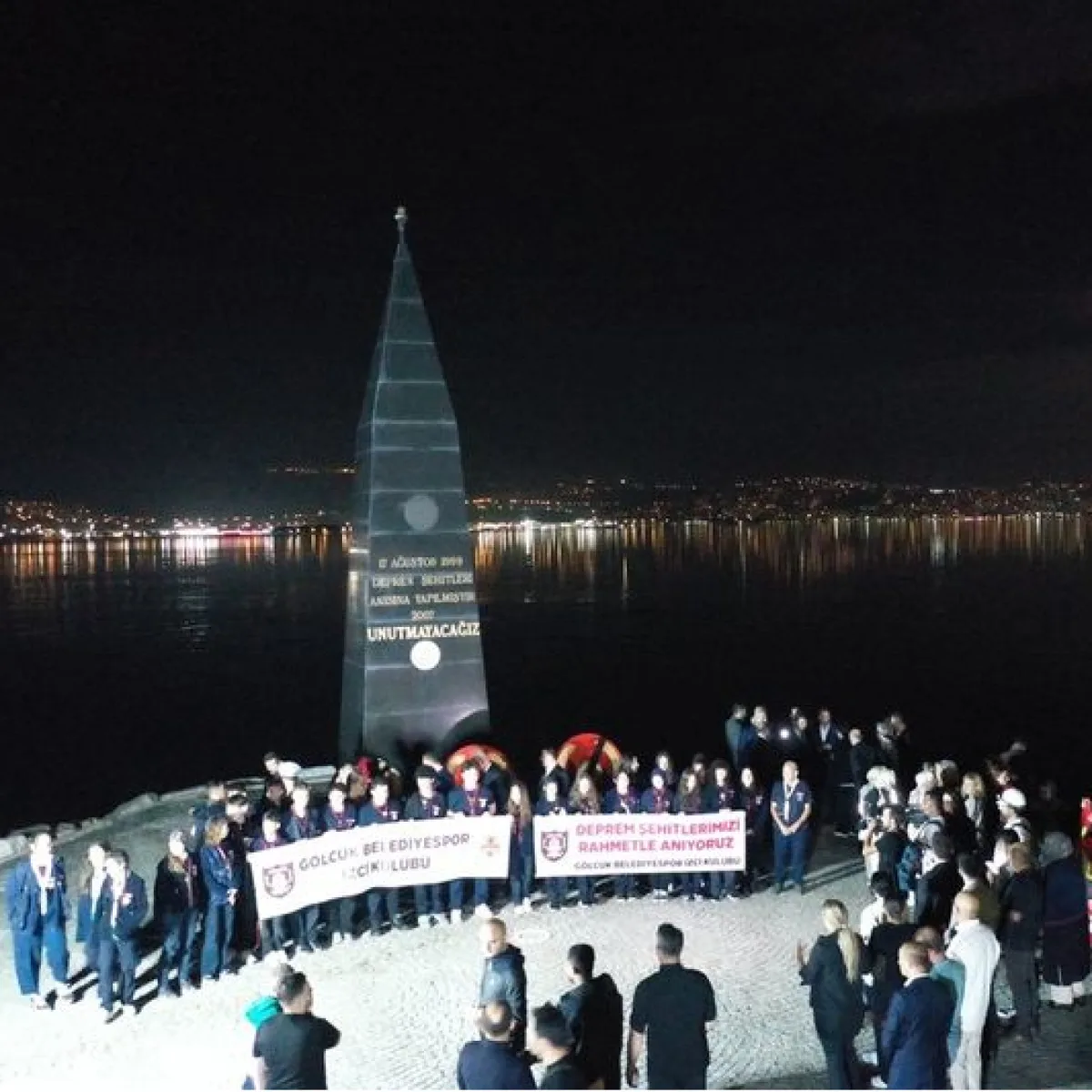
The 1999 quake struck at 03:02 on 17 August with its epicentre at Gölcük, Kocaeli. The commonly cited official toll is 17,480 deaths; a 2010 parliamentary (TBMM) report gave 18,373, as Medyascope noted. On 6 February 2023 the first shock hit Pazarcık at 04:17: 7.7 according to AFAD, 7.8 according to USGS. A second quake near Elbistan at 13:24 measured 7.6 (AFAD) or 7.5 (USGS). USGS mapped about 354 km of rupture on the East Anatolian Fault and about 161 km on the Çardak fault, with offsets up to 9 metres. Yerlikaya's February 2024 figures were 53,537 dead and 107,213 injured; Minister Murat Kurum has spoken of 11 affected provinces.
Will Istanbul have a big earthquake?
Most seismologists expect a large quake on the Marmara segment, but the published odds depend on method and threshold. A 2000 Science study by Tom Parsons (USGS), Aykut Barka (ITU) and colleagues gave Istanbul a 62% ± 15% chance of strong shaking in 30 years. A 2004 USGS recalculation by Parsons gave 53% ± 18% for an M7+ quake beneath the Sea of Marmara in 2004–2034, and 41% ± 14% for Istanbul itself. A 2016 study led by Maura Murru put the 30-year chance of an M7.3+ quake at Istanbul at 35%, or 47% with time dependence. The uncertainty ranges are wide, so roughly 40–60% is a fair summary, not a countdown.
The fault is active, but activity does not reveal timing. On 23 April 2025 a magnitude 6.2 quake (AFAD) struck about 7 km deep off Silivri, rupturing a roughly 15 km stretch of the central Marmara segment, with 184 aftershocks in the first hours. Between 18 and 20 August 2026, 185 small quakes (1.4 to 3.2) hit near the Princes' Islands; a Dokuz Eylül University team led by Prof. Hasan Sözbilir found they were on branches of the locked Adalar Fault, and AFAD's Earthquake Science Board said they were not a precursor. USGS says no method can predict a quake's time, place and size, so viral "deprem tahmini" posts have no scientific basis.
How many buildings in Istanbul are at risk?
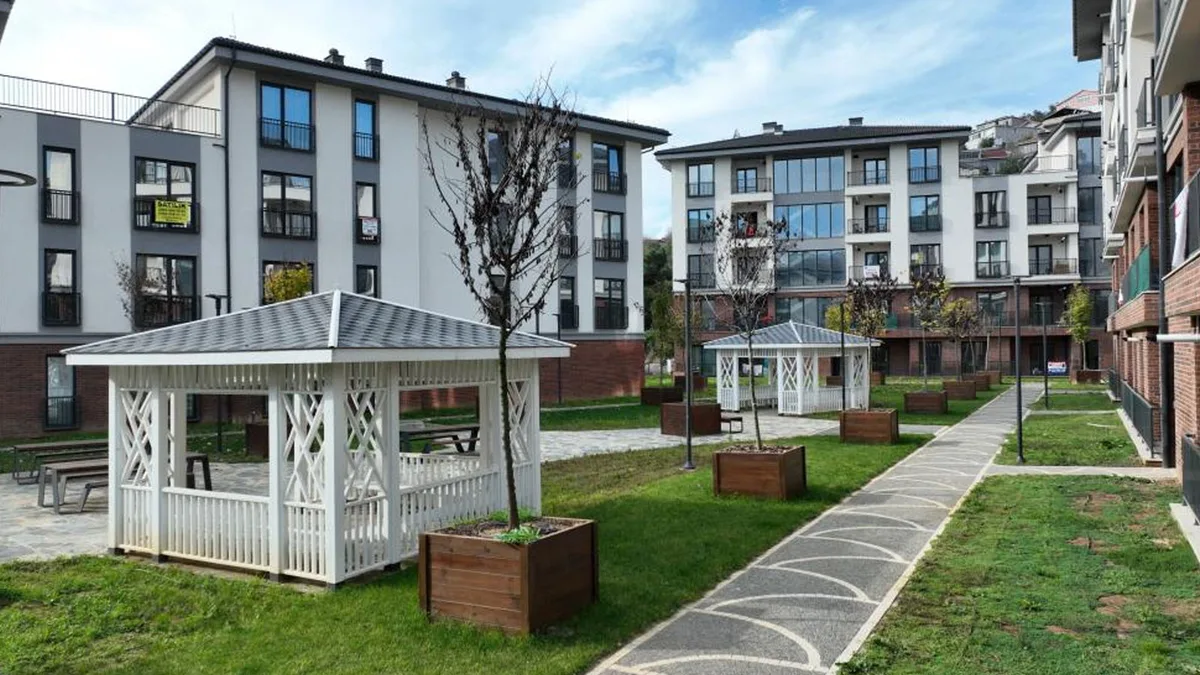
The main loss study is the Istanbul Metropolitan Municipality's (İBB) 2019 update, prepared with Kandilli Observatory and presented to a parliamentary commission in February 2021 (reported by DHA). For a magnitude 7.5 scenario it estimated about 48,000 buildings heavily or very heavily damaged, 146,000 moderately damaged and about 15,000 deaths; its probabilistic model gave about 57,000 collapsed or very heavily damaged buildings and 53,000 deaths. İBB said the figures were being revised. On 16 August 2026 Minister Kurum said urban transformation (kentsel dönüşüm) had covered 1,298,000 units in Istanbul since 2012, with 1,007,000 completed and 291,000 under way. Units are flats and shops, not buildings, so the two counts cannot be compared directly.
New buildings follow the Turkish Building Earthquake Code, published on 18 March 2018 and in force since 1 January 2019, which also covers assessing and strengthening existing buildings. Compulsory earthquake insurance is run by DASK, set up in 2000; it covers the building against quake damage and quake-triggered fire, explosion, landslide and tsunami. Since 5 September 2026 a policy ends when a home is sold, and the seller can reclaim the unused premium.

Why do AFAD and Kandilli report different magnitudes?
AFAD, the state disaster agency, lists events at deprem.afad.gov.tr, and its value is the one used in official statements. Kandilli, Boğaziçi University's observatory, runs a separate network. They use different stations, methods and sometimes magnitude types (local ML versus moment Mw), and first automatic results are often revised. On 24 September 2026 AFAD put the Karaköprü (Şanlıurfa) quake at ML 5.4, while Kandilli first said 5.8 and later 5.5. Magnitude measures energy released; intensity (şiddet) describes the shaking felt in one place.
How do earthquake alerts work in Turkey?
Most phone warnings come from Google's Android Earthquake Alerts, which use phone sensors as a crowd seismometer. On 6 February 2023 the system estimated the first quake at only 4.5–4.9 and sent 469 top-level "Take Action" alerts, when about 10 million people within roughly 160 km could have received one; Google admitted the failure in July 2025, the BBC and heise reported. On 16 October 2026 Google said the alerts cover more than 200 countries and regions. AFAD's app, AFAD Acil, places a 112 call over the internet with your location and maps assembly areas, which can also be looked up on e-Devlet.
What should you do during an earthquake?
AFAD's advice is "çök, kapan, tutun" (drop, cover, hold on): get down, protect your head and neck, hold on to something fixed and stay put until the shaking stops. Keep a deprem çantası (emergency bag) for the first 72 hours: water, food, whistle, torch, battery radio, first-aid kit, medicines, blanket, some cash and document copies. For readers in Germany, the Auswärtiges Amt (advice dated 19 October 2026) says much of Turkey, including Istanbul, is highly seismic, tells travellers to follow AFAD and local authorities, and recommends registering on its ELEFAND crisis list. Agree a family meeting point and one contact person in advance.
Recent notable earthquakes in Turkey (2025–2026)
23 April 2025, off Silivri (Istanbul): Mw 6.2, about 7 km deep (AFAD). 10 August 2025, Sındırgı (Balıkesir): 6.1, 11 km deep (AFAD). 27 October 2025, Sındırgı: 6.1, abandoned buildings collapsed, no deaths reported (AFAD, via bianet). 18 July 2026, Battalgazi (Malatya): 5.0, no damage reported. 18–20 August 2026, Marmara off the Princes' Islands: swarm of 185 small quakes. 21 September 2026, Saimbeyli (Adana): 5.0 (AFAD). 24 September 2026, Karaköprü (Şanlıurfa): ML 5.4 per AFAD, 5.5 per Kandilli. 4 October 2026, Saimbeyli: 4.8 and 4.9 within 17 minutes, then 5.2 at Sumbas, Osmaniye (AFAD). 10 October 2026, Marmara near Yalova: 3.5, felt in Istanbul. This page will be updated after any magnitude 5+ quake in Turkey, when İBB publishes revised loss estimates and when the ministry reports new transformation totals.
Sources
- USGS — Frequently asked questions about the 2023 earthquakes in Türkiye
- USGS — Recalculated probability of M≥7 earthquakes beneath the Sea of Marmara (Parsons, 2004)
- Parsons, Toda, Stein, Barka, Dieterich — Heightened odds of large earthquakes near Istanbul (Science, 2000)
- USGS — M≥7 earthquake rupture forecast and time-dependent probability for the Sea of Marmara (Murru et al., 2016)
- e-Devlet / AFAD — Afet ve Acil Durum Toplanma Alanı Sorgulama
- DASK — Hakkında (compulsory earthquake insurance)
- Auswärtiges Amt — Türkei: Reise- und Sicherheitshinweise (Stand 19.10.2026)
- Diken — Bakan Yerlikaya: 6 Şubat depremlerinde ölenlerin sayısı 53 bin 537 (2 Feb 2024)
- Medyascope — 7,7'lik depremdeki can kaybı 1999'daki Büyük Marmara Depremi'ni geçti (10 Feb 2023)
- Karar / DHA — İBB'nin TBMM'ye sunduğu deprem raporundan çarpıcı detaylar (20 Feb 2021)
- Türkgün — AFAD: Deprem Kuzey Anadolu fayı ile uyumlu (Silivri, 24 Apr 2025)
- Dünya — AFAD'dan Sındırgı'daki depreme ilişkin ön değerlendirme raporu (11 Aug 2025)
- bianet — Magnitude 6.1 earthquake shakes Turkey's northwest (27 Oct 2025)
- Milli Gazete — Şanlıurfa depremi 5,4 mü 5,8 mi? AFAD ve Kandilli neden farklı (24 Sep 2026)
- heise online — Google: Earthquake early warning system did not work properly in Turkey (29 Jul 2025)
- Medyascope — AFAD acil durumlar için uygulama geliştirdi (23 Mar 2022)
- Karar / AA — Deprem çantasını ilk 72 saate göre hazırlayın (10 Aug 2025)
- Alomaliye — Türkiye Bina Deprem Yönetmeliği (RG 18.03.2018, no. 30364)
- Cupure — Istanbul Completes Transformation of 1 Million Housing Units Amidst Earthquake Preparedness Efforts
- Cupure — Marmara Sea Micro-Quakes Linked to Fault Branches, Not Main Fault
- Cupure — Turkish scientists dismiss claims that micro-quakes signal a major earthquake
- Cupure — 5.4 Magnitude Earthquake Strikes Şanlıurfa, Felt in Surrounding Cities
- Cupure — Turkey Ends Automatic Transfer of Earthquake Insurance Policies on Property Sales
- Cupure — Google Expands Android Earthquake Alerts to More Than 200 Regions
- Cupure — Two Earthquakes of Magnitude 4.8 and 4.9 Hit Adana, Turkey
- Cupure — Marmara Earthquake Victims Remembered on 27th Anniversary