COP31 in Antalya 2026: Dates, Agenda, Who Is in Charge and What Is at Stake
A guide to the UN climate summit Turkey hosts in Antalya on 9–20 November 2026: how the unusual Turkey–Australia split presidency works, what negotiators must settle, Turkey's own climate targets, and the coal and civil-society disputes around it.
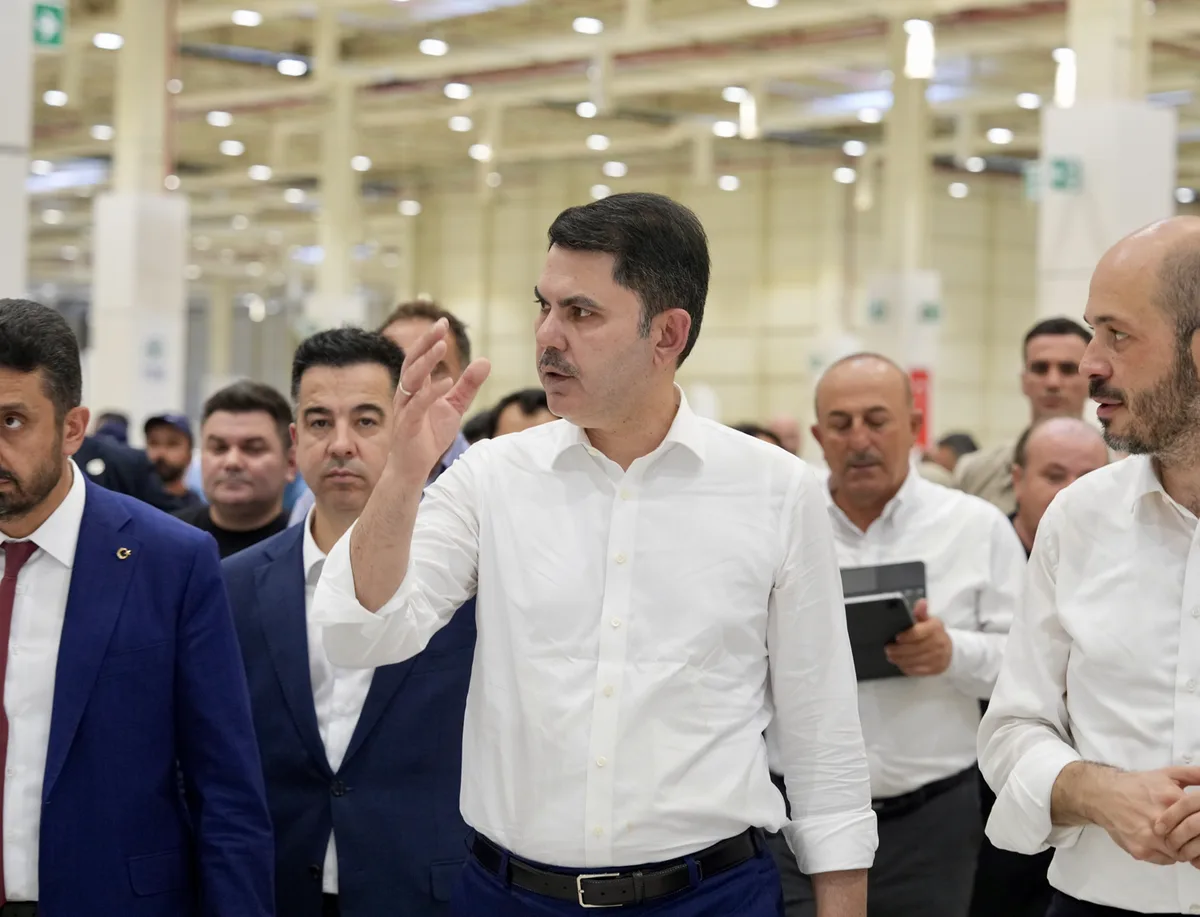
COP31, the 31st Conference of the Parties to the UN Framework Convention on Climate Change (UNFCCC), runs from 9 to 20 November 2026 at the EXPO site in Antalya, on Turkey's Mediterranean coast. It is the first COP Turkey has hosted, and it comes with an arrangement no previous summit has used. Turkey's environment minister, Murat Kurum, is COP31 President. Australia's climate and energy minister, Chris Bowen, is "President of Negotiations" and runs the formal talks. Heads of state meet on 11–12 November. Delegates have to settle unfinished work on adaptation, climate finance, the just transition and emissions cuts. They meet in the year a UN assessment concluded that holding warming to 1.5C is no longer possible. Turkish attendance estimates run from more than 100,000 (Erdoğan, 7 September) to about 130,000 from 190 countries (Antalya's governor, quoted by Hürriyet). There is no official UNFCCC registration figure yet.
How did Turkey get COP31, and who presides?
Australia and Turkey both bid for COP31. Australia had proposed Adelaide and had the backing of the 18-member Pacific Islands Forum. Because hosting needs consensus, the deadlock threatened to send the summit to the UNFCCC's default seat in Bonn. At COP30 in Belém, Brazil, the two governments made a deal instead. Australia's prime minister's office announced it on 23 November 2025. Turkey hosts the summit physically in Antalya, including the World Leaders Summit, and is nominated for election as COP President. Australia holds the President of Negotiations role from the end of COP30 to the end of COP31, with "exclusive authority in relation to the negotiations". It also picks the ministerial co-facilitators and presides over a Pacific pre-COP. Turkish outlets such as Milliyet describe the result as a decision taken jointly by 196 countries.
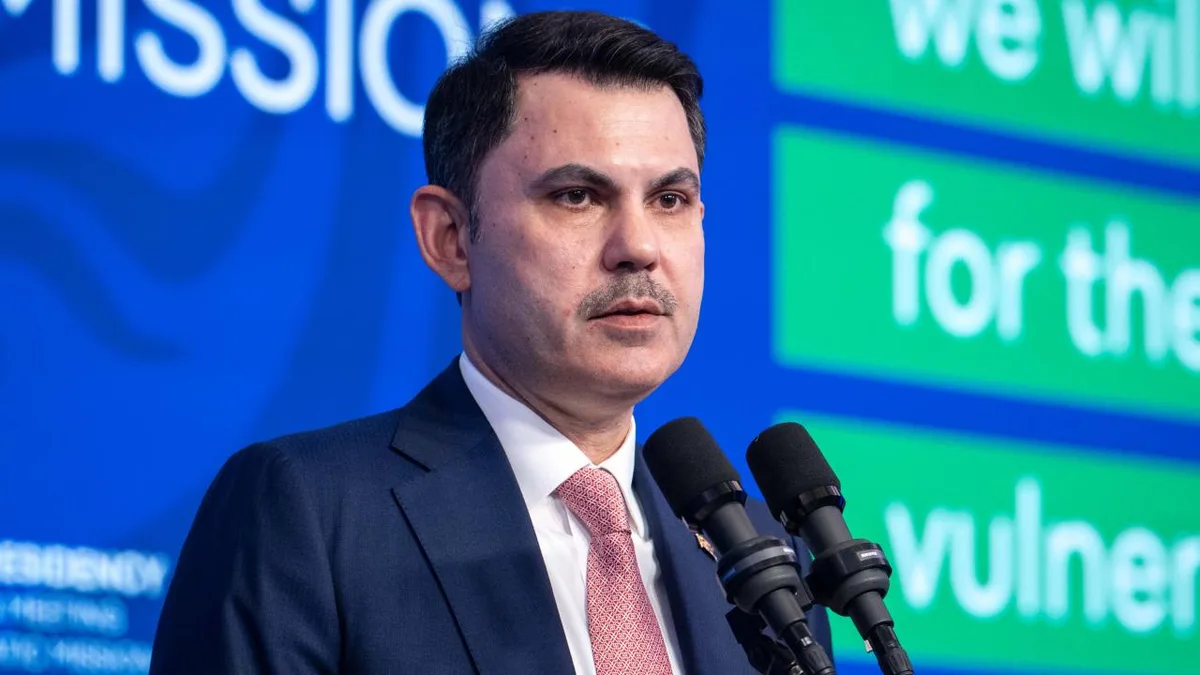
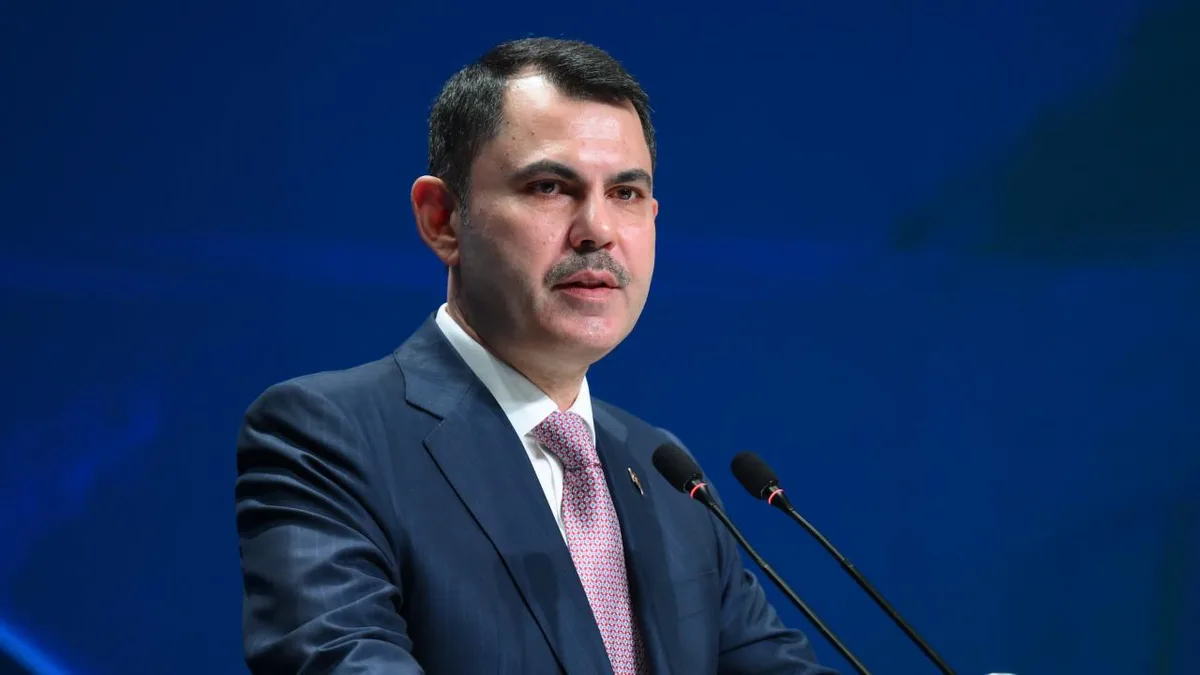
Both men have roles, and they describe them differently. Bowen said in 2025 that the role gave him the presidency's powers over the negotiations: appointing co-facilitators, drafting texts and issuing any overarching "cover" decision. The published modalities say the COP31 President assigns an Australian representative as President of Negotiations and delegates those functions for the duration of the summit. If the two sides disagree, consultations continue "until the difference is resolved to mutual satisfaction". Speaking in Trabzon on 10 September 2026, Kurum told reporters that Turkey and Australia are "not co-presidents" and that the final decision rests with the COP31 presidency, according to Climate Home News. Bowen has said the two countries work together "seamlessly". The two ministers met again in Fiji in October. Turkey also leads the Action Agenda, the voluntary track that runs alongside the negotiations. Its team includes COP31 CEO Fatma Varank and High-Level Champion Samed Ağırbaş, president of the Zero Waste Foundation.
What will negotiators have to decide?
The June 2026 intersessional talks in Bonn (SB64) passed several files to Antalya without agreed text, according to Carbon Brief's review. The first is adaptation. The 59 Global Goal on Adaptation indicators agreed at COP30 still stand, but developing-country groups want the goal to reference the COP30 pledge to at least triple adaptation finance by 2035, and Canada, Norway and Japan opposed this. The mitigation work programme also failed to agree even short conclusions. On finance, the new goal is $300 billion a year for developing countries by 2035, with an aspiration of $1.3 trillion under the Baku to Belém Roadmap. Developed countries reported $136.7 billion in 2024, and aid cuts, particularly from the US, threaten that figure. Developing countries also want a dedicated Article 9 finance item on the COP31 agenda. The most advanced file is the just transition: a "Belém–Antalya Mechanism" is being prepared for adoption in November. Antalya also opens the second Global Stocktake, which runs to 2028.
Turkey's "implementation COP" agenda and its own targets
Kurum calls COP31 an "implementation COP". On 22 September 2026, in the UN's ECOSOC chamber in New York, he launched an Action Agenda organised around "dialogue, consensus, action". According to Yeni Şafak and TRT Haber, it has 10 priority themes, 6 global goals, 11 initiatives and 13 supporting outputs. Milliyet lists the 2035 targets: raise electricity's share of global energy use to 35%, halve the growth in waste generation, cut building energy intensity by at least 25%, and lift circular material use to at least 15%. The other two are climate-resilient farming and climate education across society, and a wider "Climate Implementation Bridge". The International Energy Agency is a strategic partner. Its head, Fatih Birol, told Hürriyet that electricity's current share is 23%. On 24 September Kurum named Ethiopia, Fiji, Indonesia, Pakistan and Uzbekistan as the Bridge's first pilot countries, at an event run with UNDP. An OECD partnership was announced in Paris on 17 September.
Turkey's net-zero target year is 2053. Its second NDC ("NDC 3.0"), dated 9 November 2025, caps 2035 emissions at 643 million tonnes of CO2 equivalent. That is a cut of 466 million tonnes against a business-as-usual path, but well above the 458.8 million tonnes Enerdata reports for 2018. The earlier 2023 pledge aimed for 695 million tonnes in 2030. Climate Action Tracker rates Turkey "critically insufficient" overall and says the 2035 target is far from 1.5C-compatible. At the UN on 23 September 2026, President Recep Tayyip Erdoğan said Turkey had set new 2035 targets in electrification and zero waste. He also argued that climate goals must match each country's economic and social realities. Ankara often cites its Zero Waste Movement, which turned nine on 27 September and says it has recovered 90 million tonnes of waste.
What are the controversies?
Coal is the main criticism. İklim Ağı, a network of 17 Turkish NGOs, said on 15 September that plans for a new 1,050 MW coal unit at Karabiga in Çanakkale and a capacity expansion at Afşin-Elbistan contradict Turkey's presidency. A 350.org report covered by Bianet attributes 75 million tonnes of CO2 to coal trade by the two co-hosts since the Paris Agreement. Neither country has committed to a full coal exit. Greenpeace Türkiye has called for a coal phase-out timetable and a ban on plastic waste imports. Satellite data reported by The Guardian put methane from Istanbul's Silivri landfill at 7.4 tonnes an hour. Kurum has confirmed that the Action Agenda has no explicit fossil-fuel transition initiative, and says electrification will reduce fossil use anyway. Rights groups point to the arrest of more than 200 activists around January's NATO summit in Ankara. Kurum has said civil society will be able to make its voice heard.
What happens next?
Timeline. 5–8 October 2026: the pre-COP in Nadi, Fiji, with a leaders' event in Tuvalu, chaired by Kurum and co-led by Australia. Kurum used it to urge countries to keep 1.5C within reach. 6–8 October: youth climate workshops in 30 Turkish provinces. 19–30 October: UN biodiversity COP17 in Yerevan. 9 November: COP31 opens in Antalya. 11–12 November: World Leaders Summit. Unusually, it falls on days three and four rather than at the start. 20 November: the scheduled close, although COPs often overrun. Things to watch: whether a Belém–Antalya just transition mechanism is adopted, whether the adaptation-finance tripling enters the adaptation goal, whether an Article 9 finance item gets on the agenda, and how the Turkey–Australia split works in the final hours. COP32 follows in Addis Ababa, Ethiopia, in 2027.
Sources
- Prime Minister of Australia — COP to be hosted by Türkiye with Australia leading negotiations (23 Nov 2025)
- Prime Minister of Australia — Pre-COP Leaders' Event in Fiji and Tuvalu
- Enerdata — Türkiye's NDC aims to cut GHG emissions by 466 MtCO2eq by 2035
- Climate Action Tracker — Türkiye
- Carbon Brief — Bonn climate talks: key outcomes from the June 2026 UN climate conference
- Climate Home News — Türkiye says it has 'final decision' at COP31 despite Australia running negotiations
- Climate Home News — Türkiye sets COP31 dates and appoints youth champion
- Milliyet — 'İklim krizi artık güvenlik meselesi' (COP31 2035 targets)
- Hürriyet — Antalya'da İklim Zirvesi seferberliği
- Hürriyet — Fatih Birol on the 35% electrification target
- Karar — İklim Ağı'ndan COP31 öncesi kömür uyarısı
- Bianet — Türkiye and Australia's coal record: 75 million tonnes of CO2
- OdaTV — Erdoğan: more than 100,000 people expected at COP31
- Cupure — Turkey's Environment Minister Inspects COP31 Preparations in Antalya
- Cupure — Turkey's Environment Minister Murat Kurum Outlines Climate Action Plans Ahead of COP31 in Antalya
- Cupure — President Erdoğan Addresses UN Climate Summit, Announces COP31 in Antalya
- Cupure — COP31 President Announces First Pilot Countries for Climate Action Bridge
- Cupure — Turkey's COP31 Presidency and OECD Forge Strategic Partnership on Climate Action
- Cupure — Murat Kurum to Chair Pre-COP Summit in Fiji and Tuvalu Ahead of COP31
- Cupure — Youth Climate Workshops to be Held in 30 Provinces Ahead of COP31
- Cupure — High Methane Emissions Detected at Turkey's Landfills, Study Finds