The 2026 Flydubai Co-Pilot Attack: Timeline, Investigation and Unanswered Questions
What happened on flydubai flight FZ1073 to Tel Aviv on 30 September 2026, what UAE prosecutors allege against the co-pilot, what is and isn't known about an Iran link, and what the case means for cockpit security.
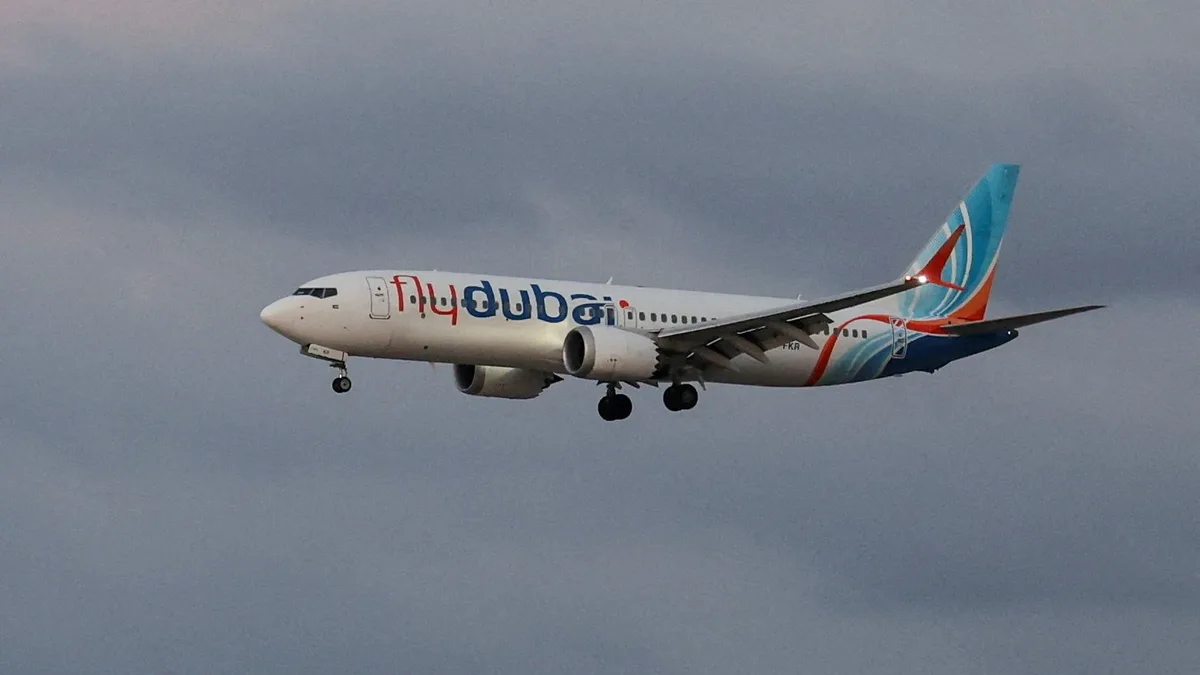
On 30 September 2026, flydubai flight FZ1073 from Dubai to Tel Aviv made an emergency landing at Tabuk in north-western Saudi Arabia after a violent attack in the cockpit. The aircraft was a Boeing 737-8 MAX with 174 passengers and eight crew on board. According to the UAE Attorney General, Hamad Saif Al Shamsi, the first officer hit the Indian captain, Smit Machchhar, with the aircraft's emergency axe. Al Shamsi says the first officer was trying to take over the jet and fly it into a passenger terminal at Tel Aviv's Ben Gurion Airport as a suicide attack. Crew and passengers restrained him and two other flydubai pilots landed the plane. Nobody on board died. The suspect is a 29-year-old Omani national, whom Reuters and AP name as Hamam al-Hammami. UAE prosecutors say he has confessed, but he has not been tried, and the allegations against him remain unproven.
What happened on board flight FZ1073?
Flight data from AirNav Radar and Flightradar24 give the outline. The aircraft, registered A6-FKF, left Dubai at about 03:05 UTC and climbed to around 34,000 feet. At roughly 05:21 UTC, more than two hours into the flight, it went into a sudden steep descent. Reports of the drop vary, from nearly 14,000 feet in under 30 seconds to more than 17,000 feet in about two minutes. It levelled off near 15,000 feet. At 05:28 UTC the transponder showed 7700, the general emergency code. About six minutes later it switched to 7500, the code for unlawful interference, and Israel scrambled fighter jets. The 737 briefly entered Jordanian airspace and then turned back. It landed at Prince Sultan bin Abdulaziz International Airport in Tabuk at 06:45 UTC (09:45 local time). Most passengers were Israeli. In its first statement, flydubai called the event an "altercation" in the flight deck and asked the public not to speculate.
Accounts of the rescue differ in their details. Machchhar says he forced the cockpit door open even though he was badly hurt. Israeli Prime Minister Benjamin Netanyahu told CNN that the captain unlocked the door and that a passenger, Yaniv Hayun, found the first officer at the controls and restrained him. The Attorney General's 9 October statement gives a different account. It says a flydubai captain travelling as crew for the return flight noticed the cockpit door opening and closing, entered using the access code, and restrained the suspect with a cabin crew member and passengers. That captain and another first officer then landed the aircraft. Saudi Arabia's Interior Ministry said both injured pilots were treated locally and flown to Abu Dhabi on 1 October with a UAE security team.
Who is the co-pilot, and what do UAE prosecutors allege?
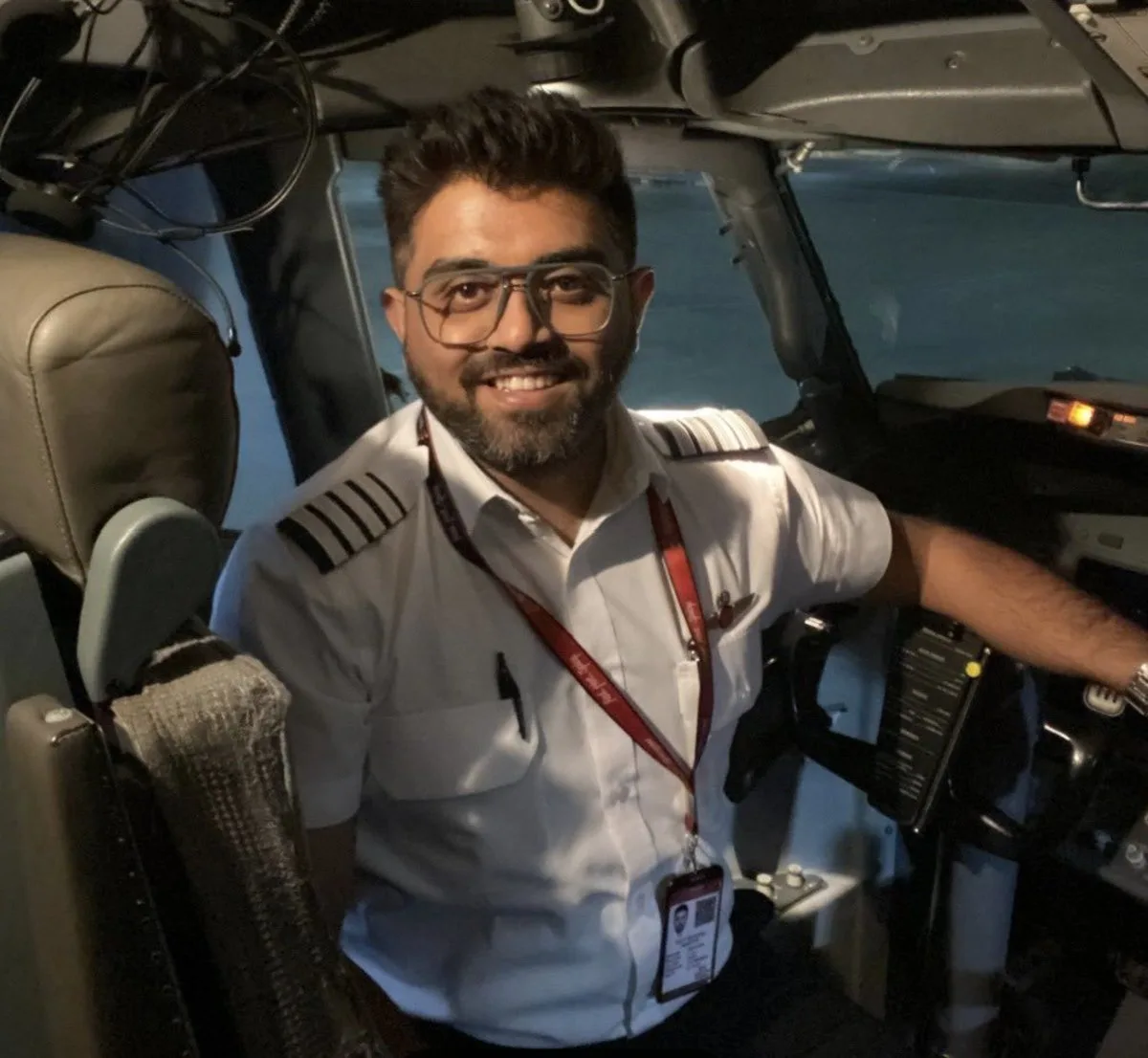
Machchhar is an Indian national from Mumbai. UK press have given his age as 39. On 2 October, speaking from hospital in Abu Dhabi, he described the attack to Indian Prime Minister Narendra Modi in a video call. He said he had been fighting for his life when he realised the aircraft was descending. UAE officials have not named the first officer. Reuters and AP, citing people with knowledge of the case, identify him as Hamam al-Hammami, an Omani born in the UAE. Al Shamsi's office says he flew for Oman Air and Royal Air Maroc before joining flydubai in January 2026, but reported dates for those jobs differ. The Wall Street Journal and Reuters, citing unnamed officials, reported that Oman had grounded him over concerns about extremist views. Oman has not commented.
The prosecution's case has developed in three stages. On 1 October, Al Shamsi set up a specialist team working with the General Civil Aviation Authority. He said UAE courts have jurisdiction because the aircraft is registered in the UAE. On 3 October he described the attack as a "terrorist act". The 9 October statement, carried by the state news agency WAM, went further. It said the suspect began moving towards extremism in 2017 while studying in Australia and took inspiration from the 11 September 2001 attacks. It also said he trained with a private boxing coach and used two earlier flights to Tel Aviv to learn the route and the airport. According to the statement, he confessed in front of his lawyer that he acted alone. Prosecutors say they are still checking that claim and looking for possible accomplices. The statement also said flydubai's hiring checks, including his licence and a certificate of good conduct, showed no warning signs. Regional and Israeli officials told The Guardian he may first have planned the attack for July.
Was Iran involved?
No public evidence links Iran to the attack. The incident came during the US–Israeli war with Iran, and politicians quickly raised the question. On 1 October Netanyahu said it was too early to say who was ultimately behind it. He later said the first officer had "undergone Islamist radical indoctrination", but did not give evidence. Israel's UN ambassador, Danny Danon, said Israel could not yet link the attack to a state or organisation. US President Donald Trump first said the attacker was either a terrorist or mentally unstable. He then warned that Iran would be hit "very hard" if it were found to be involved. Two Israeli security officials told reporters their early assessment was that the man acted alone. The UAE's 9 October account says nothing about Iran and describes a lone actor with an ideological motive.
What does it mean for cockpit security and pilot screening?
After 9/11, cockpit doors were reinforced and locked from inside, which protects pilots from attackers in the cabin. The best-known case where this protection worked against passengers is Germanwings flight 9525 on 24 March 2015. Its co-pilot locked the captain out and crashed the Airbus A320 into the French Alps, killing all 150 people on board. France's BEA found that he had severe depression that doctors did not report to his employer, and it called for clearer limits on medical confidentiality. Three days after that crash, the European Union Aviation Safety Agency (EASA) recommended that two authorised people be in the cockpit at all times, then moved to a risk-based approach in July 2016. FZ1073 differs from Germanwings in two ways. Both pilots were in the cockpit, and on the UAE account the motive was ideological rather than mental illness. On 4 October, Netanyahu ordered a review of "all aspects" of security on foreign flights to Israel. Israel's opposition leader, Yair Lapid, blamed the government for the attack. According to reports, Israeli authorities received the crew list, which showed the first officer's nationality, 48 hours before the flight.
What happens next?
Several things are still open. UAE prosecutors have said they will publish further findings, including whether anyone else was involved. As of 14 October, no indictment or trial date had been announced. In Australia, a joint counter-terrorism team of the Australian Federal Police, Victoria Police and ASIO is investigating the suspect's links there and has promised an update. flydubai, which ran up to 10 flights a day to Israel, has suspended them, and Emirates has suspended its codeshare seats on the route. The UAE also withdrew landing permission for Israeli airlines' repatriation flights on 7 October. Israeli carrier Arkia plans to restart regular Dubai service on 31 October and Israir on 18 November, while El Al has said it is aiming for November, pending approvals. Developments that would add to this account include charges or a court date in the UAE, an Australian or Omani statement on what was known about the suspect beforehand, the result of Israel's security review, and any change to cockpit-access or pilot-screening rules.
Sources
- Al Jazeera — Flydubai co-pilot plotted 'suicide' attack on Israel, UAE says (9 Oct 2026, citing WAM)
- Geo News — flydubai co-pilot planned suicide attack on Tel Aviv airport: UAE (Attorney General statement details)
- Al Jazeera — Who is the mystery co-pilot behind the Flydubai attack? (3 Oct 2026)
- Kuwait Times (SPA/KUNA) — Saudi probe finds flydubai co-pilot assaulted captain
- Gulf News — flydubai FZ1073: What happened on board and what we know so far
- AirNav Radar — flydubai FZ1073 diverts to Tabuk after mid-air cockpit incident
- Al Jazeera — What happened on diverted Flydubai flight from Dubai to Tel Aviv?
- EASA — Follow-up of Germanwings Flight 9525 accident: survey on '2-person-in-the-cockpit' recommendation
- Times of Israel — UAE confirms flydubai copilot was planning 9/11-style suicide attack on Ben Gurion Airport
- Al-Monitor (Reuters) — Australia probes flydubai co-pilot links, police say
- The Guardian — Flydubai co-pilot originally planned attack for July, investigators believe
- The Guardian — Should cockpits stay locked from the inside? Flydubai stabbing raises flight security questions
- The National — UAE–Israel flights after flydubai suspension
- The Independent (AP) — UAE had shared details about FlyDubai flight with Israel, including pilots' names and nationalities
- Cupure — Flydubai Co-Pilot Planned Suicide Attack on Tel Aviv Airport, UAE Prosecutor Says
- Cupure — Flydubai Flight FZ1073 Makes Emergency Landing in Saudi Arabia Amid Terrorism Concerns
- Cupure — Captain Smit Machchhar Saves Lives After Being Stabbed by Co-Pilot on FlyDubai Flight
- Cupure — Netanyahu: Too Early to Determine Iran's Role in Flydubai Incident
- Cupure — Trump Threatens Iran Over FlyDubai Incident, Promises Strong Response
- Cupure — Australia Investigates Links of Flydubai Co-Pilot Who Attacked Captain
- Cupure — Israeli Prime Minister Netanyahu Orders Security Review for International Flights to Israel Following Flydubai Incident
- Cupure — UAE Cancels Landing Permissions for Israeli Airlines Again