
Turkey's Rent Increase Cap 2026: How the Monthly Rate Is Set, Latest Figure
How Turkey's legal rent increase cap (kira artış oranı) is set from TÜİK's 12-month average inflation, the rate for every month since January 2025, how to calculate your new rent, the five-year rule, disputes, and tax for landlords living in Germany.
In Turkey, the most a landlord can raise the rent when a lease renews is fixed by law: the 12-month average change in the consumer price index (TÜFE) published by the Turkish Statistical Institute (TÜİK), widely called the "kira artış oranı". For leases renewing in October 2026 the cap is 31.49%, the figure produced by September's inflation data on 5 October 2026. It has fallen every month since January 2025, when it was 58.51%. The temporary 25% cap on residential rents ended on 1 July 2024 and has not been replaced. The next figure, for November renewals, comes with October's inflation data on 3 November 2026. This page explains the rule, lists every monthly rate, and shows how to calculate an increase, as of 19 October 2026.
What is the legal rent increase cap in Turkey?
Article 344 of the Turkish Code of Obligations (Türk Borçlar Kanunu, No. 6098) says an agreed rent increase for a renewed lease year is valid only if it does not exceed the change in the 12-month average CPI over the previous lease year. The rule covers residential and roofed workplace leases, including leases signed for more than one year. If the parties do not agree, a judge sets the rent fairly, again within the same ceiling. The cap is a maximum: landlord and tenant can agree on a smaller increase.
Until 2019 the benchmark was the producer price index (ÜFE). Law No. 7161 of January 2019 replaced it with the CPI average, so ÜFE or Yİ-ÜFE no longer sets the legal limit. Workplace tenants who are merchants or companies were exempt from Article 344 for eight years from 1 July 2012 under Law No. 6217; since 1 July 2020 the same cap applies to them.
Is the 25% rent cap still in force?
No. Parliament capped residential rent increases at 25% in June 2022 (Law No. 7409) for renewals up to 1 July 2023, and extended the cap in July 2023 (Law No. 7456) to renewals up to 1 July 2024. The current text of the code contains no later transitional rule, and as of 19 October 2026 no new law or bill bringing back a fixed cap had been reported. Since July 2024 the 12-month CPI average has been the only ceiling.
Rent increase rate by month, 2025–2026
Maximum increase for leases renewing in each month of 2025: January 58.51%, February 56.35%, March 53.83%, April 51.26%, May 48.73%, June 45.80%, July 43.23%, August 41.13%, September 39.62%, October 38.36%, November 37.15%, December 35.91%.
Maximum increase for leases renewing in each month of 2026: January 34.88%, February 33.98%, March 33.39%, April 32.82%, May 32.43%, June 32.24%, July 32.03%, August 31.90%, September 31.79%, October 31.49%. November 2026: published with October inflation on 3 November 2026.
Each rate comes from the previous month's inflation data: October's 31.49% is the 12-month average in TÜİK's September bulletin, released on 5 October 2026. Many Turkish outlets label the rate by the data month instead, so the same number can appear as "September" in one article and "October" in another; this table always uses the month in which the lease renews. Figures as reported on release day by Milliyet, Habertürk, Ekonomist, BirGün, Capital and others, and checked against TÜİK's September bulletin for October.

How do I calculate my rent increase?
Find the rate for the month your lease renews and multiply: new rent = current rent × (1 + rate). A rent of 30,000 lira renewing in October 2026 may rise by at most 9,447 lira (31.49%), to 39,447 lira. A lease renewing in April 2026 used the March data released on 3 April, which gave 32.82%. The cap is a ceiling, not an automatic raise: a lower increase or a fixed amount below the cap agreed in the contract applies, while an agreed increase above the cap is not valid for the part that exceeds it.
What happens after five years?
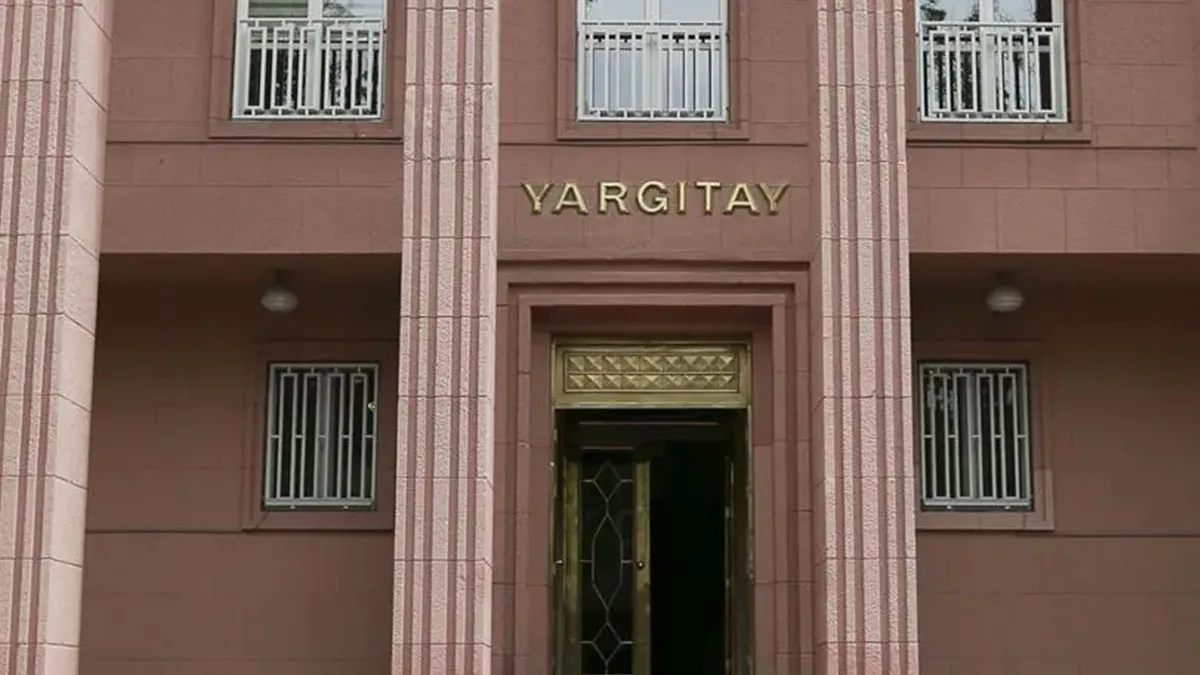
The cap does not apply indefinitely. For leases longer than five years, or renewed after five years, and every five years after that, a judge sets the new rent taking into account the CPI average, the condition of the property and comparable rents (Article 344/3); this is how rents that have fallen far behind the market can be brought up. On 3 October 2026 Turkish media reported a Court of Cassation (Yargıtay) ruling that such a case can be brought before five years have passed if the rent is far below comparable rents, depending on the original terms. Rents agreed in a foreign currency cannot be changed for five years.
Rent disputes: court cases, mediation, eviction
A rent determination case (kira tespit davası, Article 345) binds from the start of the new lease year only if it is filed at least 30 days before that year begins, or if the landlord gave written notice in time and files by the end of the new year. Since 1 September 2023 most rent disputes must first go to mediation (arabuluculuk) under Law No. 7445 before a court will hear them. A landlord cannot end a residential lease simply because its term has expired: it renews automatically each year, and only after a ten-year extension period may the landlord terminate without giving a reason, with three months' notice. Eviction for the landlord's own need, after two justified written warnings for late rent in one lease year, or on a written undertaking to vacate, each has its own one-month deadline.
Why are rents still rising faster than the cap?
The cap limits renewals for sitting tenants, not the market. TÜİK's rent item in the CPI was still up 47.9% year on year in June 2026, according to Gedik Yatırım's breakdown of TÜİK data, far above that month's 32.24% cap; the series also reflects new contracts and court-set rents. The central bank's index of rents paid by new tenants rose 29.21% in June, its weakest increase in about five years, Hürriyet Daily News reported on 24 July. Emlakjet and Endeksa put the average rent at 28,040 lira nationally and 45,510 lira in Istanbul in August 2026.
Renting out a flat in Turkey from Germany: tax
For landlords living in Germany, rental income from property in Turkey is taxed in Turkey under the 2011 Germany–Türkiye double taxation agreement. For residential rent, the first 47,000 lira of 2025 income (declared in March 2026) and 58,000 lira of 2026 income (to be declared in March 2027) is tax-free under General Communiqué No. 332 of 31 December 2025, reported by KPMG and Alomaliye; the exemption is lost entirely if the declaration is late or incomplete, and it does not apply to workplaces. Germany exempts this income but, according to German tax advisers, still takes it into account when setting the tax rate on other income (Progressionsvorbehalt), so it belongs in the German tax return.
What happens next?
3 November 2026, 10:00: TÜİK publishes October inflation and the cap for November renewals. 3 December 2026: November data, the cap for December renewals. Early January 2027: December data, the cap for January 2027 renewals; 3 January 2027 is a Sunday, so the release is likely to move to a weekday. Because the average smooths twelve months of data, it moves slowly: annual inflation was 29.73% in September, already below the 31.49% average. This page will add each new rate.
Sources
- Mevzuat — Türk Borçlar Kanunu No. 6098 (consolidated text, Art. 344–352)
- TÜİK — Tüketici Fiyat Endeksi, Eylül 2026 (5 Oct 2026)
- Allianz Türkiye — Kira artış oranı (8 Oct 2026)
- Hisse.net — Eylül enflasyonu belli oldu (5 Oct 2026)
- Hesapkurdu — Kira artışı hesaplama (Oct 2026)
- bianet — Kira uyuşmazlıklarında zorunlu arabuluculuk 1 Eylül'de başlıyor (2023)
- Hürriyet Daily News — Rent growth slows to lowest level in 58 months (24 Jul 2026)
- KPMG Vergi — 2026 yılı gelir vergisi dilimleri ve had tutarları
- Alomaliye — 2025 kira geliri beyanı, istisna tutarı (5 Mar 2026)
- Steuerberater Tabak — DBA Türkei: ein umfassender Leitfaden (2026)
- TRT Haber — Yargıtay: Kira bedeli emsalden düşükse 5 yıldan önce de dava açılabilir (Oct 2026)
- Cupure — Turkey's September 2026 Rent Increase Rate Expected to Reach 31%
- Cupure — Turkey's September Inflation Rate Revealed: Monthly at 1.84%, Annual at 29.73%
- Cupure — Supreme Court Rules Tenants Can Sue for Rent Below Market Rate Before 5 Years
- Cupure — Landmark Ruling by Turkey's Supreme Court Affects Millions of Tenants
- Cupure — Turkish Court Rules Tenants Can Reclaim Overpaid Rent Under Duress
- Cupure — Turkey's Central Bank Reports Slowing Rent Inflation Due to Increased Housing Supply Post-Earthquake