Christa Pike's Failed 2026 Execution: What Went Wrong in Tennessee and What Comes Next
How Tennessee's 30 September 2026 attempt to execute Christa Pike failed after two pentobarbital doses, how her condition evolved, who resigned and what is under investigation, and whether the state can legally try again.
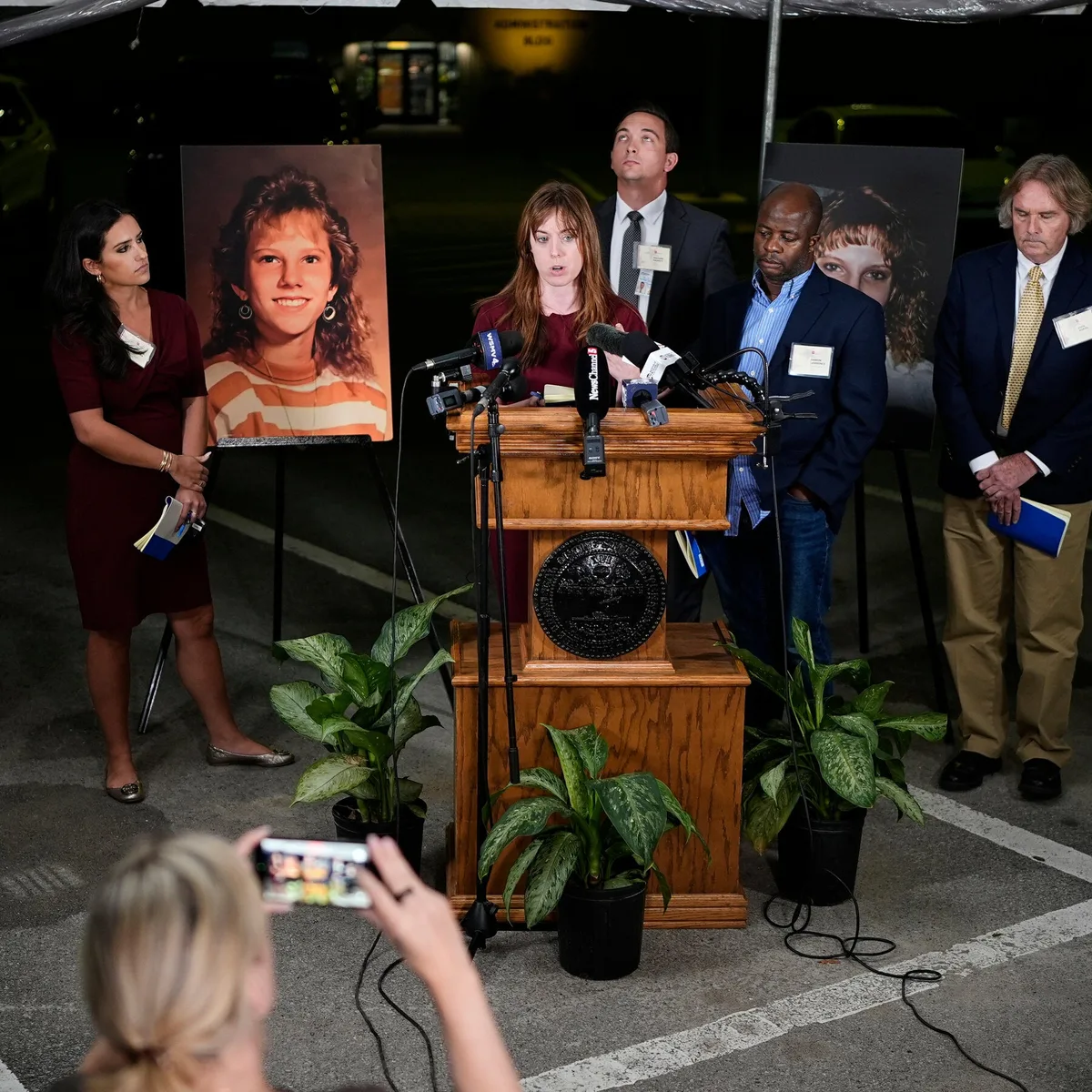
On 30 September 2026 the US state of Tennessee tried to execute Christa Pike, 50, by lethal injection at Riverbend Maximum Security Institution in Nashville, and failed. She received two doses of the barbiturate pentobarbital, kept breathing for more than an hour and was taken to hospital, where she spent several days unconscious on a ventilator. The Death Penalty Information Center (DPIC) says she is the first person in the modern US death-penalty era to survive after lethal execution drugs were actually injected. Governor Bill Lee paused all executions for the rest of 2026, the state prisons commissioner resigned, and Pike was back in prison by 10 October. Whether Tennessee can, or will, try again is now the central legal question.
Who is Christa Pike and what was she convicted of?
Pike was 18 and a student at the Job Corps training centre in Knoxville when, on 12 January 1995, she, her 17-year-old boyfriend Tadaryl Shipp and Shadolla Peterson took 19-year-old classmate Colleen Slemmer to a wooded area, where Slemmer was tortured and killed. A jury convicted Pike of first-degree murder and conspiracy in 1996 and sentenced her to death; DPIC calls her the youngest woman sentenced to death in Tennessee in the modern era. Shipp, a juvenile at the time, received a life sentence (reports differ on whether it carries parole; DPIC cites eligibility from November 2025), and Peterson, who testified against both, received probation. The Tennessee Supreme Court upheld the verdict in 1998, and the US Supreme Court declined her federal habeas appeal in 2020. Her lawyers sought clemency citing her age, childhood sexual abuse and mental illness; Slemmer's family wanted the sentence carried out. Pike would have been the first woman executed by Tennessee in over 200 years (sources give 1819 or 1820 for the last one).
How did the execution attempt unfold on 30 September?
The Tennessee Supreme Court set the date in an order of 30 September 2025, and Governor Lee declined clemency on 28 September 2026. The execution was due at 10 a.m., but about an hour earlier the US Court of Appeals for the Sixth Circuit granted a short stay to consider her claims on the merits. The state appealed, and that evening the US Supreme Court lifted the stay over the dissent of its three liberal justices. According to the Associated Press minute-by-minute account, the curtain rose at about 7:27 p.m. with an IV already in her arm; Pike said her arm hurt and asked whether it should feel that way. The curtain closed at 7:46 p.m., reopened about three minutes later for the second dose the protocol allows, and closed for good at 8:06 p.m. Witnesses said snoring-like breathing could be heard for roughly 40 minutes. Her attorney Randy Spivey said he demanded a halt and medical care at about 8:22 p.m.; witnesses were told to leave at 8:53 p.m., and ambulances arrived at about 9:14 p.m. The death warrant expired at midnight that night.
What went wrong with the lethal injection?
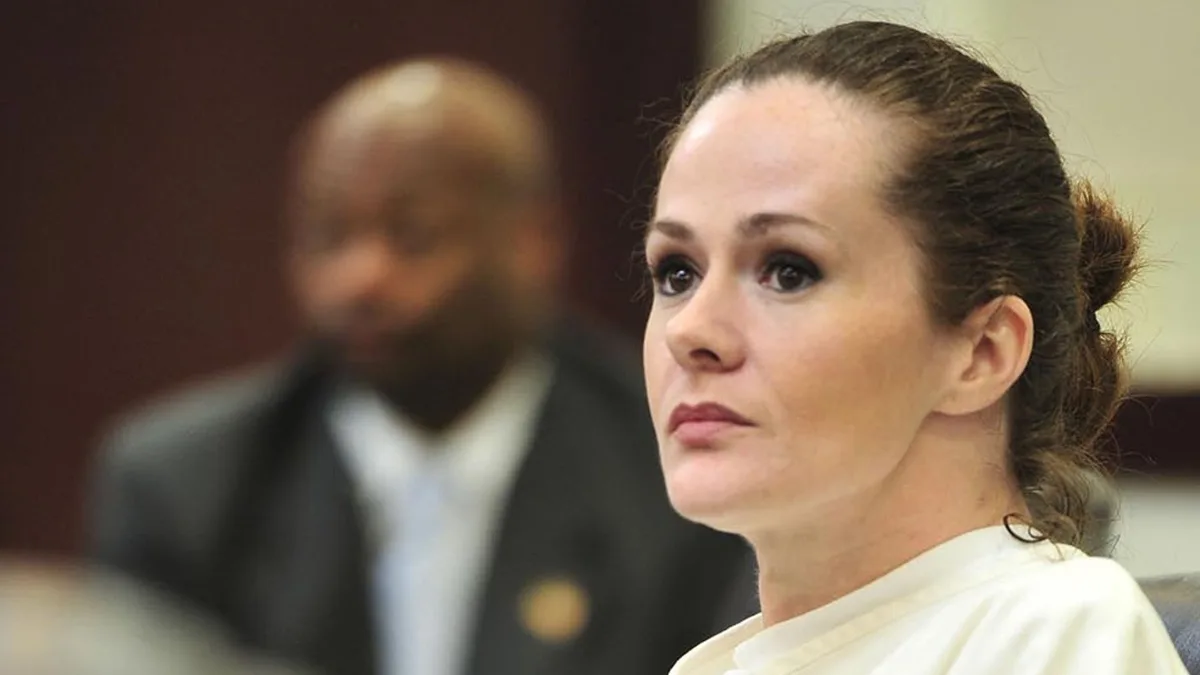
Tennessee switched in 2024 to a single-drug protocol: a 5-gram dose of pentobarbital, with a second set of syringes if the prisoner is not dead. The protocol does not say what happens if the second set also fails. The Department of Correction (TDOC) said it followed every step of the protocol approved by the Attorney General's Office and that the drug has consistently been effective. Pike's lawyers say otherwise. Spivey, of the Tennessee Office of the Post-Conviction Defender, said the team spent about an hour placing IV lines and used at least seven needles in her left arm alone. A filing in Davidson County Chancery Court said both her arms arrived at hospital swollen, burned and blistered, and argued that the team apparently did not notice the lines were misplaced or the veins had blown, so the drug went into tissue rather than the bloodstream. The state has not confirmed this. Before the date, her lawyers had warned of small veins and a blood-clotting disorder, thrombocytosis, and asked for a firing squad or hanging instead; the requests were refused. 911 recordings obtained by AP show further delay: a call reporting that Pike was alive was first treated as false, and a dispatcher was told at 9:03 p.m. that no medical help was needed. Responders were cleared to enter at 9:11 p.m., about half an hour after the first call.
What has happened since: her condition, resignations and inquiries
Lawyers said on 1 October that Pike was in critical condition, and on 2 October that she was unconscious and intubated while doctors worked to clear the drug. On 6 October they said she was awake and speaking, calling her recovery medically unprecedented. By 8 October assistant federal defender Stephen Ferrell said she was walking, though not fully recovered mentally, and her lawyers were unsure whether she would regain full use of her arms. On 10 October her attorneys said she had been discharged and returned to the Debra K. Johnson Rehabilitation Center, the Nashville women's prison where she has lived for three decades,. Governor Lee called the events deeply disturbing, ordered a comprehensive third-party review and postponed the state's one remaining 2026 execution, that of Gary Wayne Sutton, set for 3 December. On 3 October he announced that Correction Commissioner Frank Strada would step down later in October. Strada said he still believed the department followed protocol. Before joining TDOC in January 2023, he oversaw executions in Arizona, including that of Clarence Dixon in 2022, when staff took nearly 30 minutes to find a vein. The Attorney General's Office hired former US attorney Ed Stanton to lead the review; he led the 2022 review that followed the halted execution of Oscar Smith. On 7 October Chancellor I'Ashea Myles ordered officials to preserve all evidence, including drugs, needles, logs and messages. This was Tennessee's second failure of 2026: on 21 May it called off Tony Carruthers' execution when a backup IV line could not be placed. On 7 October Texas executed Jamaal Howard with pentobarbital, the first US execution since the Pike attempt.
Can Tennessee try to execute her again?
Probably, in law, but no case quite matches hers. In Louisiana ex rel. Francis v. Resweber, the US Supreme Court ruled 5-4 in 1947 that Louisiana could electrocute Willie Francis again after a 1946 malfunction as an unforeseeable accident; he was executed in May 1947. Ohio failed to find a usable vein for Romell Broom in 2009. The Ohio Supreme Court ruled 4-3 in 2016 that a second attempt was allowed because no lethal drug had entered his body, and the US Supreme Court declined to intervene. Broom died of suspected COVID-19 in 2020 before a new date was carried out. Alabama called off Doyle Hamm's execution in 2018 and agreed in a settlement not to seek another date. Alabama failed to execute Kenneth Smith by injection in 2022, then executed him with nitrogen gas on 25 January 2024. Pike's lawyers argue that a second attempt would be cruel and unusual and could breach the ban on double jeopardy. They also note that in Broom's case the absence of any drug was central, while Pike received two full doses. DPIC executive director Robin Maher called the Pike case unlike any other botched execution in the modern era.
What happens next?
Key dates and open points. Any new execution date would have to be set by the Tennessee Supreme Court, and Governor Lee's pause covers the rest of 2026. Ed Stanton's review has no published deadline. Its findings and the preserved evidence will shape further litigation. Pike's lawyers have asked Lee to commute her sentence to life without parole; as of 13 October he had not ruled. Lee is term-limited: Tennessee elects a new governor on 3 November 2026, and the winner takes office in January 2027. Senator Marsha Blackburn, the Republican nominee, has called for exploring other execution methods. An interim correction commissioner is due to be named.
Sources
- Death Penalty Information Center — Tennessee's execution of Christa Pike would make her the first woman executed in the state in over 200 years
- Louisiana ex rel. Francis v. Resweber, 329 U.S. 459 (1947)
- Associated Press via Courthouse News — How Tennessee's failed execution of Christa Pike unfolded, minute by minute
- NBC Chicago — What happens next for Christa Pike
- News 3 LV — Why did Christa Pike's execution fail? What we know about Tennessee's lethal injection
- Newsweek — Christa Pike's failed execution: full timeline as 911 calls reveal delays
- Al Jazeera — Christa Pike is awake after surviving execution: what happens now?
- Al Jazeera — Tennessee prisons official resigns after Christa Pike's failed US execution
- Fox 10 Phoenix — Resigned Tennessee prison chief oversaw troubled Arizona executions
- NPR via WUNC — Christa Pike discharged from the hospital and back in prison
- Valley News Live — Tennessee calls off Tony Carruthers execution after failing to find a vein (21 May 2026)
- Ideastream — Ohio Supreme Court allows second execution attempt on Romell Broom (2016)
- Prison Legal News — Alabama prisoner who survived failed execution attempt will not face another (Doyle Hamm)
- Equal Justice Initiative — Questions surround execution of Kenneth Smith
- Cupure — Tennessee's Execution Attempt of Christa Pike Fails After Two Doses
- Cupure — Christa Pike's Execution Halted by Court Just Before Scheduled Time
- Cupure — Tennessee Prisons Chief Resigns After Failed Execution of Christa Pike
- Cupure — Christa Pike Regains Consciousness and Speaks After Failed Execution in Tennessee
- Cupure — Tennessee Judge Orders Preservation of Evidence from Christa Pike's Failed Execution
- Cupure — Christa Pike Discharged from Hospital After Surviving Tennessee Execution Attempt
- Cupure — 911 Calls Show Delayed Emergency Response After Christa Pike’s Failed Execution